CHRISTCHURCH · OFFICIAL COUNCIL DATA
What's actually in Christchurch's tap water
Christchurch City Council released a year of lab results for all fourteen zones it runs - 3,267 chlorine samples, aquifer wells to Banks Peninsula streams. E. coli: zero detections in 1,586 samples. The water is safe. It also settles a local legend: every zone in the release is chlorinated now, the famously unchlorinated city included. And on Banks Peninsula, two supplies went past the New Zealand standard for haloacetic acids. The free check reads your address.

THE HEADLINE NUMBERS
The unchlorinated city is over.
Christchurch built its reputation on untreated aquifer water. The council's own release closes that chapter: its note says every supply it operates is chlorinated, and all 3,267 samples across every zone found a residual. The city's well water still shows why the reputation existed - no trihalomethanes detected in any city zone, and no fluoride added anywhere. The peninsula's stream-fed supplies tell a harder story. The numbers are below; what you do about them is up to you.
ZONE BY ZONE
What was found in your zone
Chlorine, E. coli and total coliforms are tested year-round in every zone; metals and chlorination by-products a few times a year. These are the council's own results. The city's seven zones and Brooklands/Kainga draw on wells; the six Banks Peninsula supplies draw on local streams, bores and wells.
| Zone | Chlorine, typical | THMs, highest sample | Haloacetic acids | Worth knowing |
|---|---|---|---|---|
| Central Christchurch | 0.41 mg/L | Not detected | Trace only, below 0.01 | a mercury trace, inside the health goal |
| Northwest | 0.39 mg/L | Not detected | Trace only, below 0.01 | all clear |
| West | 0.41 mg/L | Not detected | Trace only, below 0.01 | one coliform result over 2,400 MPN |
| Riccarton | 0.75 mg/L | Not detected | Not detected | chlorine peaked at 4.0 mg/L |
| Ferrymead | 0.42 mg/L | Not detected | Trace only, below 0.01 | one coliform detection, 170 MPN |
| Parklands | 0.33 mg/L | Not detected | Not detected | a mercury trace, inside the health goal |
| Rawhiti | 0.35 mg/L | Not detected | Not detected | all clear |
| Brooklands / Kainga | 0.41 mg/L | Not detected | Trace only, below 0.01 | all clear |
| Akaroa-Takamatua | 0.94 mg/L | 0.056 mg/L | 0.0261 mg/L | a lead detection - the health goal is zero |
| Duvauchelle | 0.95 mg/L | 0.114 mg/L | 0.1209 mg/L | HAA ratio 1.46 - over the NZ standard |
| Little River | 0.53 mg/L | 0.103 mg/L | 0.1156 mg/L | HAA ratio 1.51 - over the NZ standard |
| Pigeon Bay | 0.45 mg/L | 0.029 mg/L | 0.0081 mg/L | a lead detection - the health goal is zero |
| Birdlings Flat | 0.54 mg/L | See note | Not detected | all clear |
| Wainui | 0.52 mg/L | Not detected | Not detected | pH 6.9, below the aesthetic range |
Source: Christchurch City Council LGOIMA response 1725882, received 1 September 2026. Chlorine typicals are zone medians of the council's lab samples, September 2025 to August 2026 (the continuous analyser record was not part of the release). THM and HAA figures are the highest per-sample results; HAA sums the five HAA5 species. "Trace only, below 0.01" means quantified results existed but sat below other samples' reporting ceilings, so no honest peak can be stated - the same reason Birdlings Flat carries no THM figure. The West coliform result was reported as "greater than 2,400" - a floor, not a peak. Zero E. coli detections district-wide. Duvauchelle and Little River's haloacetic acids exceeded the New Zealand standard (the lab's own compliance ratios, 1.46 and 1.51 against a limit of 1; Little River's dichloroacetic acid 0.054 mg/L against its 0.05 maximum). Every other reading sits inside New Zealand's legal limits. The release carries no turbidity results, no city-zone pH, and no PFAS or microplastics tests.
WHAT THIS MEANS FOR YOUR HOUSE
Three things to know.
The city's aquifer, now with chlorine
All 126 sources feeding the city supply are wells, and it shows: no trihalomethanes detected in any city zone all year. But the unchlorinated era is over. Every zone carries a residual now, typically 0.33 to 0.75 mg/L. Chlorine's job ends at your tap - a whole-house carbon filter takes it out where the water enters your house.
Banks Peninsula went past the standard
Chlorinating stream water forms by-products, and the peninsula shows it. Duvauchelle's THM peak of 0.114 mg/L is 760 times the EWG health guideline. And haloacetic acids went past New Zealand's own legal standard at Duvauchelle and Little River - the lab's compliance ratios came back at 1.46 and 1.51 against a limit of 1. Akaroa and Pigeon Bay also returned lead traces against a health goal of zero.
Safe and pure are different questions
Zero E. coli detections in 1,586 samples is a genuinely clean year. And no fluoride is added anywhere in Christchurch. What the release cannot tell you: no turbidity results, no city pH, and not one test for PFAS or microplastics in the whole year of data. Zero is a choice you make at your own tap.
YOUR ADDRESS
This is the city picture. Get the report for your home.
The free water check takes about two minutes, and it includes the PDF water report for your address - written from the same release, read for your house.
THE SYSTEM THAT FITS
What we'd fit in Christchurch.
Christchurch adds no fluoride, so the case here is different: the by-products on the peninsula, the chlorine that now runs city-wide, and the PFAS and microplastics nobody tests for. Those only come out at the kitchen tap with reverse osmosis, and that's the ES60's job. If it's the chlorine in your showers that bothers you, that's a whole-house filter - we supply those by arrangement, so call us on 021 709 370.
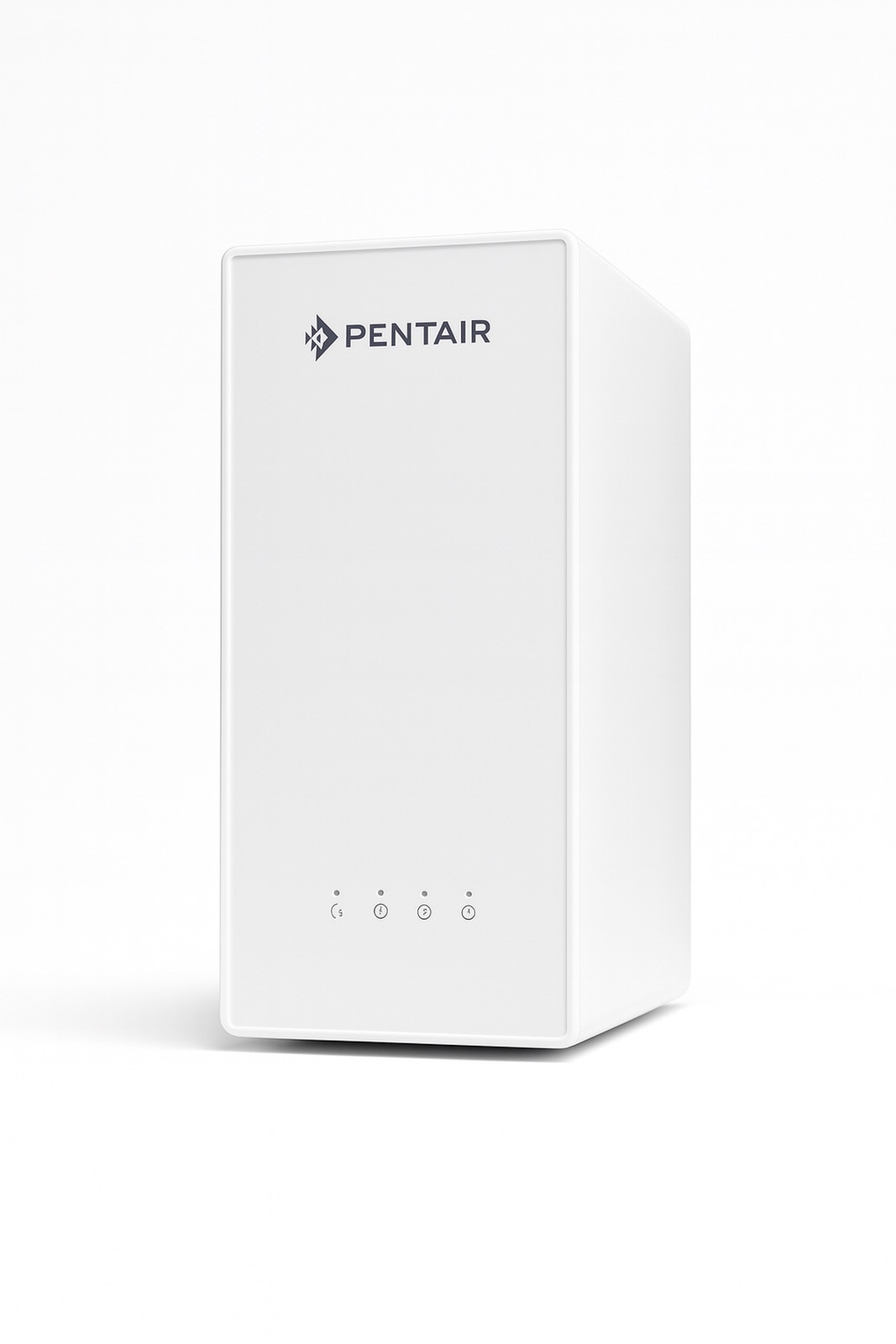
Under the sink · removes THMs, PFAS and microplastics
Pentair ES60 under-bench RO
RRP $1,748 $1,595 Save $398
Independently lab-tested (report FW250926-28-C), including trichloromethane - the main THM. Reverse osmosis removes 99.9% of microplastics in published testing and 94%+ of PFAS. No tank, and it tells you when filters are due. Ships with the first year's refill free.
ViewCHRISTCHURCH WATER QUESTIONS