GORE · OFFICIAL COUNCIL DATA
What's actually in Gore and Mataura's tap water
Gore District Council answered request CM 26 15016 free of charge on 11 November 2026: a year of network chlorine, pH and E. coli for Gore and Mataura, its metals and chlorination by-product rounds, three years of nitrate at its wells, and the Gore supply's Drinking Water Safety Plan. What it shows: no E. coli in any of 123 network samples, lead traces in both networks inside the legal limit, and nitrate in the Coopers raw wells at or above the 11.3 mg/L limit in 16 results since July 2025, while the treated water leaving the plant stayed under it. Turbidity was not released. The free check reads your address.

THE HEADLINE NUMBERS
Two networks, and a nitrate record at the wells.
Every network E. coli sample in the year came back clear, and every reading at the tap sits inside New Zealand's legal limits. The same release shows what else is in the water: trihalomethanes in every round in both towns, up to 301 times the EWG health guideline in Mataura, a lead trace in each network, and nitrate in Gore's Coopers raw wells at or above the limit in 16 results between July 2025 and February 2026. The numbers are below; what you do about them is up to you.
NETWORK BY NETWORK
What was found in your network
Chlorine and pH by hand at the network sites about three times a week; E. coli and coliforms through the year; the eight metals in January and July 2026; and chlorination by-products in November 2025 and February, May and August 2026. These are the council's own results. Typical figures are medians; peaks are the highest single reading.
| Network | Chlorine, typical | THMs, highest sample | Haloacetic acids | Worth knowing |
|---|---|---|---|---|
| Gore | 0.72 mg/L | 0.032 mg/L | 0.005 mg/L | not fluoridated, per the council's safety plan; 60 E. coli samples, none detected; pH 7.25 typical; lead 0.0014 mg/L at 20 Nelson Street on 7 July 2026 and below 0.0005 in January; THMs 213 times the EWG health guideline and 22% of the combined limit; the East Gore plant's treated water 1.05 to 9.79 mg/L nitrate-nitrogen, under the 11.3 limit |
| Mataura | 0.69 mg/L | 0.0452 mg/L | 0.012 mg/L | fluoride not stated - the release holds no fluoride result or treatment description for Mataura; 63 E. coli samples, none detected; total coliforms once, 13 cfu per 100 mL; pH 7.4 typical; lead 0.0016 mg/L at 6 Culling Terrace on 27 January 2026 and 0.001 in July; THMs 301 times the EWG health guideline and 39% of the combined limit; nitrate-nitrogen at the raw intake no higher than 2.32 mg/L |
Source: Gore District Council LGOIMA release CM 26 15016, answered 11 November 2026, all PDF. Chlorine and pH are the council's field readings at its network sites, 2 October 2025 to 29 September 2026 (158 in each town); E. coli and coliforms are its lab results for every network sample filed as drinking water, 2 October 2025 to 23 September 2026 (60 in Gore, 63 in Mataura; three Gore Swimming Pool samples the lab files as bathing water are left out, all clear). Metals are two rounds at one tap per network, 27 January and 7 July 2026; a February round was cancelled by the lab. Trihalomethane figures are per-sample sums of the quantified species, which agree with the lab's own printed ratios; haloacetic acid figures add the acids the lab quantified. Nitrate-nitrogen is the council's three-year report of raw well and intake results and its lab results for the East Gore plant's treated water. Turbidity was not released - the council holds it only as continuous monitoring - and the lab download prints no detection limits, which the council says it would assess releasing if asked. The release also covers the Dolamore Park camping ground's own tap: four E. coli samples, none detected, and one metals sample on 1 July 2026 with lead at 0.003 mg/L, copper 0.038 and zinc 0.322, all inside New Zealand's limits; it has no chlorine results, so it is not reported as a supply. The regulator's register holds no notification for either network. No PFAS or microplastics tests anywhere in the release.
WHAT THIS MEANS FOR YOUR HOUSE
Three things to know.
Nitrate at the Coopers wells
The council's safety plan says nitrate-nitrogen in the Coopers raw water went over the limit in July 2025, and that the council issued a Do Not Drink notice and pumped Mataura River water into the aquifer to dilute it. Its nitrate report shows the Coopers wells at or above New Zealand's 11.3 mg/L limit in 16 results between 18 July 2025 and 27 February 2026, the highest 12.7 at Coopers Well 4 on 19 February 2026. Since December 2025 the Jacobstown well field, which read no higher than 2.71, has been piped into the same plant. The treated water leaving the East Gore plant read 1.05 to 9.79 mg/L across 43 results from October 2025 to September 2026, the highest on 8 October 2025, none at the limit, and no higher than 6.76 since December 2025. The release holds no nitrate result at a tap. New Zealand's limit is 11.3 mg/L measured as nitrate-nitrogen, the same limit as 50 mg/L measured as nitrate. Boiling does not remove nitrate: ESR's guide for households that run their own supply rates boiling as giving no removal, and rates reverse osmosis, and ion exchange with a resin chosen for the job, as good at removing it.
A lead trace in each town
The council samples the plumbosolvency metals at one network tap in each town twice a year. Lead read 0.0014 mg/L at 20 Nelson Street, Gore, on 7 July 2026, and 0.0016 at 6 Culling Terrace, Mataura, on 27 January 2026 - 14% and 16% of the 0.01 mg/L legal limit, against a health-based goal of zero. Copper stayed under 0.003 mg/L, and antimony, cadmium, chromium, mercury and nickel were below the lab's limits in every sample.
By-products in both towns, and what was not released
Trihalomethanes were quantified in all eight network samples: up to 0.0452 mg/L in Mataura and 0.032 in Gore - 301 and 213 times the EWG health guideline, and at most 39% of the way to New Zealand's combined limit. Haloacetic acids reached 0.012 mg/L in Mataura and 0.005 in Gore; dichloroacetic acid, the one with a New Zealand limit among those quantified, stayed at 0.006 or under against its 0.05 limit. Two things were asked for and not released: turbidity, which the council holds only as continuous monitoring, and the lab's detection limits. Nothing in the release says whether Mataura is fluoridated. Not one PFAS or microplastics test was run.
YOUR ADDRESS
This is the district picture. Get the report for your home.
The free water check takes about two minutes, and it includes the PDF water report for your address - written from the same release, read for your house.
THE SYSTEM THAT FITS
What we'd fit in Gore and Mataura.
Fluoride, THMs and the PFAS and microplastics nobody tests for only come out at the kitchen tap with reverse osmosis, and that's the ES60's job. If it's the chlorine in your showers that bothers you, that's a whole-house filter - our town twin fits at your mains and treats every tap in the house, $895 with free delivery.
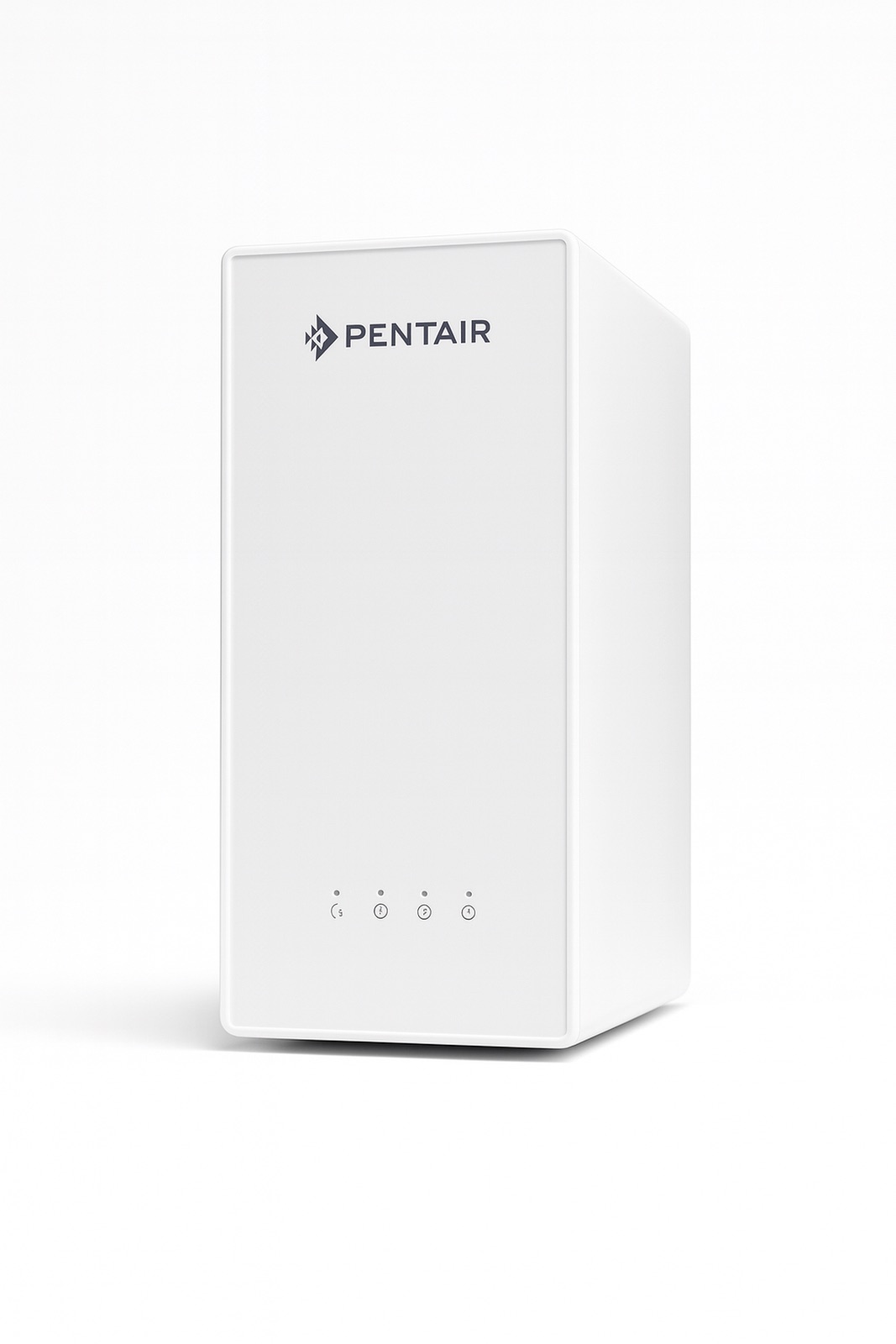
Under the sink · removes fluoride, THMs, PFAS and microplastics
Pentair ES60 under-bench RO
RRP $1,748 $1,595 Save $398
Independently lab-tested (report FW250926-28-C), including trichloromethane - the main THM. Reverse osmosis removes 99.9% of microplastics in published testing, 94%+ of PFAS, and around 90% of the fluoride where your supply adds it. No tank, and it tells you when filters are due. Ships with the first year's refill free. Pentair's brochure also lists nitrate nitrogen among the substances the unit reduces (report FW250926-28-C); it gives no percentage for nitrate, so we do not quote one.
View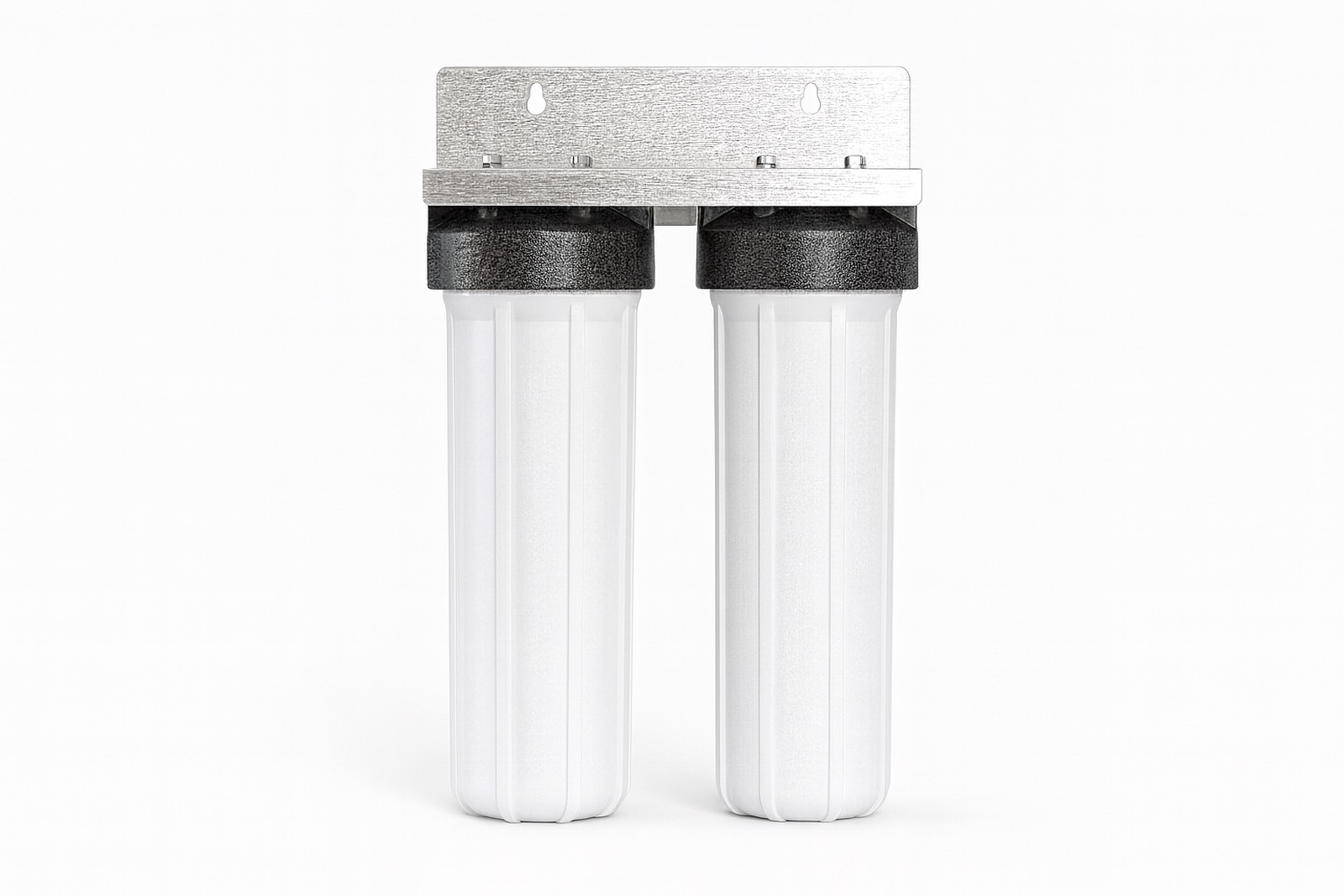
At the mains · chlorine taste, smell and sediment at every tap
Town Whole-House Twin
RRP $943 $895 Save $48
Two-stage Pentair filtration at your mains: a gradient sediment cartridge, then radial flow carbon for the chlorine taste and smell. It arrives assembled on its stainless bracket with the job card in the box, and any licensed plumber fits it in a morning. It does not remove fluoride - that is the ES60's job at the kitchen tap.
ViewGORE WATER QUESTIONS