HAMILTON · OFFICIAL COUNCIL DATA
What's actually in Hamilton's tap water
Hamilton's water company answered with a year of citywide monitoring - 1,201 samples at 45 network sites - plus the full July 2026 chemical screen, PFAS tests included. E. coli: one detection in 1,192 samples, at the minimum detectable level. The water is safe. It starts as Waikato River water, and the screen shows exactly what treatment takes out and what stays in at the tap. The free check reads your address.

THE HEADLINE NUMBERS
One river, one zone, and a full screen.
Your water passes New Zealand's rules. The treatment is genuinely good - the raw river arrives carrying arsenic above the drinking-water limit and the plant takes it well inside. The same screen shows what stays in the water: the chlorine that already did its job, the fluoride added on purpose, and the by-products chlorine leaves behind when it meets river water. All measured. All inside the legal limits. The trihalomethane total still sits above the EWG health guideline. The numbers are below; what you do about them is up to you.
THE CITY'S RESULTS
What was found in Hamilton's water
Chlorine, pH, turbidity and E. coli are tested year-round at 45 network sites; the full chemical screen runs at the city main trunk every six months. These are the results, straight from the release. Typical figures are the year's medians; peaks are the highest single sample.
| Determinand | Typical | Peak | Context |
|---|---|---|---|
| Free chlorine | 0.65 mg/L | 1.15 mg/L | legal limit 5 mg/L |
| Fluoride, treated water | 0.77 mg/L | 0.82 mg/L | added on purpose; legal limit 1.5 mg/L |
| Trihalomethanes (total) | 0.0061 mg/L | above the 0.00015 EWG health guideline | |
| Haloacetic acids (total) | Not detected | below the lab's 0.03 reporting limit | |
| Arsenic, treated water | 0.0017 mg/L | the raw river arrived at 0.0154 - above the 0.01 limit | |
| Lead | Not detected | below 0.00011 - the health goal is zero | |
| Antimony | 0.00047 mg/L | well inside the 0.006 US EPA health goal | |
| PFAS | Not detected | tested - PFOA below one part per trillion | |
| Turbidity | 0.35 NTU | 1.9 NTU | the cloudiness you see after network work |
| Acidity (pH) | pH 7.8 | 6.6 - 8.8 | within the 7.0-8.5 aesthetic range |
Source: Hamilton City LGOIMA release via IAWAI - Flowing Waters, received 28 August 2026. Year-round figures cover 1,201 samples at 45 network sites, July 2025 to July 2026; chemistry is the July 2026 six-monthly screen on the treated city main trunk (Hill Labs certificate 4257640). Fluoride is six treated-water samples leaving the Waiora plant, July to August 2026. The THM total sums quantified species only. All readings sit inside New Zealand's legal limits.
WHAT THIS MEANS FOR YOUR HOUSE
Three things to know.
River water, properly treated
The raw Waikato River arrived at the plant carrying arsenic at 0.0154 mg/L - one and a half times the drinking-water limit - and the treated water left at 0.0017, well inside it. The river's earthy taste compounds came in at 4 nanograms a litre and left below detection. The treatment earns its keep.
Fluoride is added on purpose
The river carries 0.16 to 0.18 mg/L of fluoride naturally. Treated water leaves the Waiora plant at 0.77 typically, peaking at 0.82 - the difference is added deliberately. Only reverse osmosis removes it - around 90%, at the kitchen tap.
Safe and pure are different questions
One E. coli detection in 1,192 samples, at the minimum detectable level - the operator is doing its job. And Hamilton actually tested for PFAS and found none, which no other council in our library has done. What stays in the glass: chlorine, fluoride, and a THM total 40 times the EWG health guideline. Microplastics are not tested at all. Zero is a choice you make at your own tap.
YOUR ADDRESS
This is the city picture. Get the report for your home.
The free water check takes about two minutes, and it includes the PDF water report for your address - written from the same release, read for your house.
THE SYSTEM THAT FITS
What we'd fit in Hamilton.
Fluoride, THMs and microplastics only come out at the kitchen tap with reverse osmosis, and that's the ES60's job. If it's the chlorine in your showers that bothers you, that's a whole-house filter - we supply those by arrangement, so call us on 021 709 370.
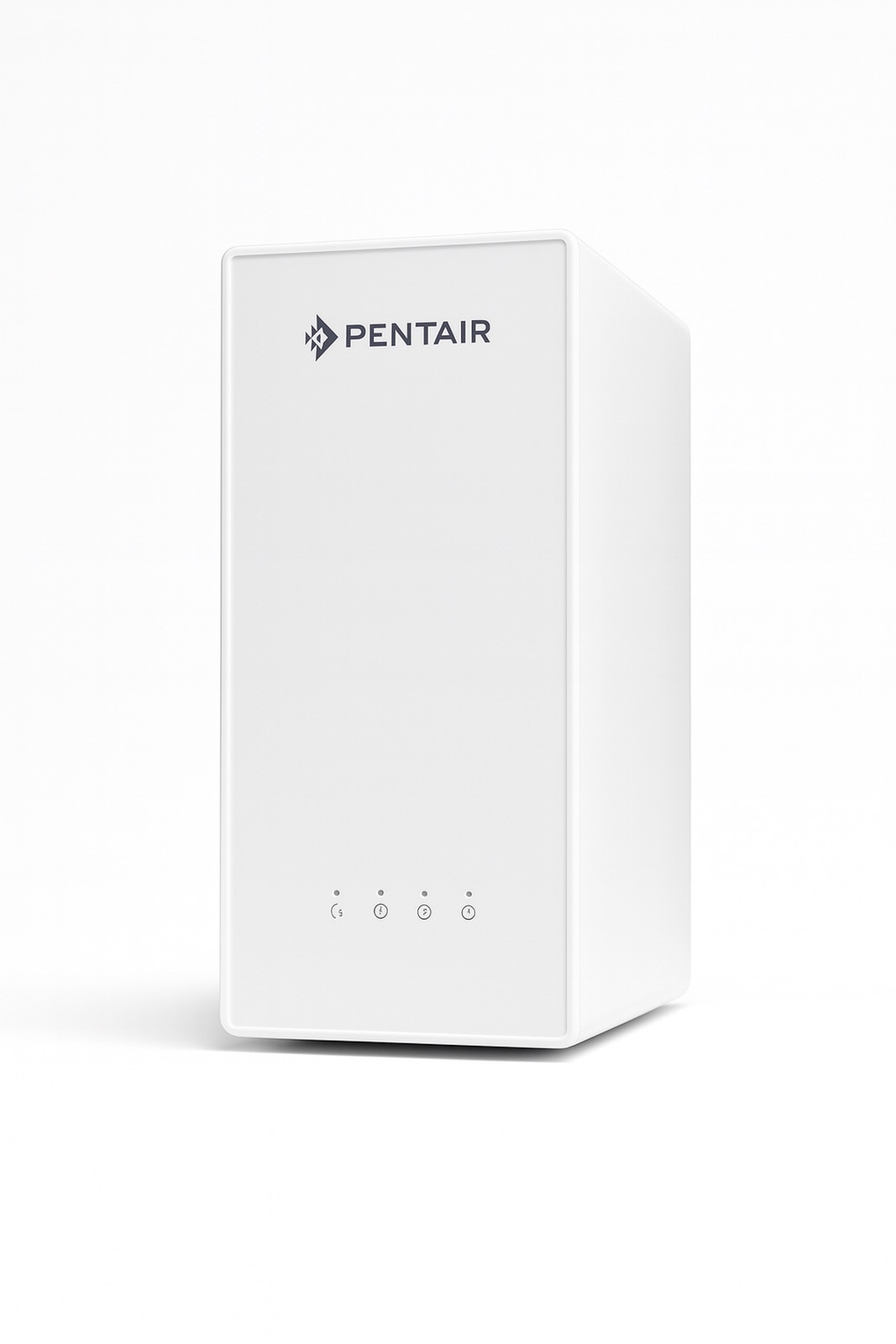
Under the sink · removes fluoride, PFAS and microplastics
Pentair ES60 under-bench RO
RRP $1,748 $1,595 Save $398
The one for river-fed supplies. Reverse osmosis removes 99.9% of microplastics in published testing, 94%+ of PFAS, and around 90% of the fluoride the plant adds. No tank, and it tells you when filters are due. Ships with the first year's refill free.
ViewHAMILTON WATER QUESTIONS