HASTINGS · OFFICIAL COUNCIL DATA
What's actually in Hastings and Havelock North's tap water
Hastings District Council answered on 14 September 2026, with its results spreadsheet following two days later: a year for the ten supplies it runs, sixteen zones from Havelock North to Whirinaki - 2,296 chlorine readings and 703 E. coli samples at 105 network addresses, with trihalomethanes and two haloacetic acids at distribution sites. What it shows: no E. coli in any network sample, six zones with every by-product below detection, and the highest chlorine and by-products at Waipatiki, Esk and Whirinaki - Waipatiki's trihalomethanes reached 78% of the New Zealand limit. What it does not hold: any metals result at any tap. The free check reads your address.
THE HEADLINE NUMBERS
Ten supplies, sixteen zones, and one gap.
Every network result in the release sits inside New Zealand's legal limits, and the council's letter says its own check found the same. The same results show what stays in the water at the tap: trihalomethanes in ten of the sixteen zones, 718 times the EWG health guideline at Waipatiki's peak, and the district's highest chlorine at Whirinaki, Waipatiki and Esk. Six zones - Hastings East, Hastings West & Central, Flaxmere, Bridge Pa, Clive and Whakatu - had every by-product below detection. One thing is missing altogether: the release holds no metals result at any tap. The numbers are below; what you do about them is up to you.
ZONE BY ZONE
What was found in your zone
Chlorine, pH and turbidity at each zone's network addresses through the year, with E. coli and coliforms in the lab; trihalomethanes and two haloacetic acids at distribution sites, once in the year for most zones and quarterly for some. These are the council's own results. Typical figures are medians; peaks are the highest single sample.
| Zone | Chlorine, typical | THMs, highest sample | Haloacetic acids | Worth knowing |
|---|---|---|---|---|
| Hastings East (Hastings Urban) | 0.80 mg/L | Not detected | Not detected | fluoride not stated - the release does not say which plant feeds which zone; chlorine peaked at 1.64 mg/L; 62 E. coli samples, none detected; no metals result in the release |
| Hastings West & Central (Hastings Urban) | 0.83 mg/L | Not detected | Not detected | fluoride not stated - the release does not say which plant feeds which zone; chlorine peaked at 1.16 mg/L; 62 E. coli samples, none detected; no metals result in the release |
| Flaxmere (Hastings Urban) | 0.88 mg/L | Not detected | Not detected | fluoride not stated - the release does not say which plant feeds which zone; chlorine peaked at 1.27 mg/L; 58 E. coli samples, none detected; no metals result in the release |
| Havelock North (Hastings Urban) | 0.82 mg/L | 0.0016 mg/L | Not detected | fluoride not stated - the release does not say which plant feeds which zone; chlorine peaked at 1.65 mg/L; 77 E. coli samples, none detected; THMs 10 times the EWG health guideline; no metals result in the release |
| Bridge Pa (Hastings Urban) | 0.91 mg/L | Not detected | Not detected | fluoride not stated - the release does not say which plant feeds which zone; chlorine peaked at 1.11 mg/L; 54 E. coli samples, none detected; no metals result in the release |
| Paki Paki (Hastings Urban) | 0.86 mg/L | 0.0202 mg/L | Not detected | fluoride not stated - the release does not say which plant feeds which zone; chlorine peaked at 1.19 mg/L; 54 E. coli samples, none detected; THMs 134 times the EWG health guideline; no metals result in the release |
| Clive | 0.84 mg/L | Not detected | Not detected | no fluoride in the council's treatment table; chlorine peaked at 1.17 mg/L; 52 E. coli samples, none detected; total coliforms once, 1 cfu per 100 mL; no metals result in the release |
| Whakatu | 0.96 mg/L | Not detected | Not detected | no fluoride in the council's treatment table; chlorine peaked at 1.30 mg/L; 14 E. coli samples, none detected; total coliforms once, 33 cfu per 100 mL; no metals result in the release |
| Haumoana and Te Awanga | 0.84 mg/L | 0.0045 mg/L | Not detected | no fluoride in the council's treatment table; chlorine peaked at 1.20 mg/L; 48 E. coli samples, none detected; THMs 30 times the EWG health guideline; no metals result in the release |
| Parkhill Farm | 0.85 mg/L | 0.0063 mg/L | Not detected | no fluoride in the council's treatment table; chlorine peaked at 1.19 mg/L; 13 E. coli samples, none detected; THMs 42 times the EWG health guideline; no metals result in the release |
| Waimarama | 0.93 mg/L | 0.0069 mg/L | Not detected | no fluoride in the council's treatment table; chlorine peaked at 1.28 mg/L; 56 E. coli samples, none detected; THMs 46 times the EWG health guideline; no metals result in the release |
| Omahu | 0.83 mg/L | 0.0042 mg/L | Not detected | no fluoride in the council's treatment table; chlorine peaked at 1.31 mg/L; 13 E. coli samples, none detected; THMs 28 times the EWG health guideline; no metals result in the release |
| Te Pohue | 0.72 mg/L | 0.0035 mg/L | Not detected | no fluoride in the council's treatment table; chlorine peaked at 1.09 mg/L; 15 E. coli samples, none detected; THMs 23 times the EWG health guideline; no metals result in the release |
| Waipatiki | 1.39 mg/L | 0.1077 mg/L | 0.017 mg/L | no fluoride in the council's treatment table; chlorine peaked at 2.50 mg/L; 16 E. coli samples, none detected; THMs 718 times the EWG health guideline and 78% of the combined limit; no metals result in the release |
| Esk | 1.31 mg/L | 0.0778 mg/L | 0.008 mg/L | no fluoride in the council's treatment table; chlorine peaked at 2.60 mg/L; 53 E. coli samples, none detected; THMs 518 times the EWG health guideline and 61% of the combined limit; no metals result in the release |
| Whirinaki | 1.62 mg/L | 0.0499 mg/L | 0.005 mg/L | no fluoride in the council's treatment table; chlorine peaked at 2.60 mg/L; 56 E. coli samples, none detected; THMs 332 times the EWG health guideline and 42% of the combined limit; no metals result in the release |
Source: Hastings District Council LGOIMA release: the response letter of 14 September 2026 and the results spreadsheet that followed on 16 September 2026, covering 1 August 2025 to 1 August 2026. The release names sample points by street address and carries no zone codes; each address is placed in one of the regulator's zones by matching its chlorine readings to the regulator's own rows. Chlorine typicals are medians of the network readings at 105 addresses, 2,296 readings; pH and turbidity come from the same visits. E. coli and total coliforms: 703 network samples, no E. coli, total coliforms twice. The spreadsheet also shows nine total-coliform results at post-treatment points, which are plant water; the letter's table lists eight of the eleven detections. THM figures are the highest per-sample sum of the quantified species at distribution sites. Haloacetic acids: the release reports two, dichloroacetic and trichloroacetic; trichloroacetic acid was below its reporting limit everywhere and dichloroacetic acid quantified at Waipatiki, Esk and Whirinaki only, held against its 0.05 limit. Metals: the release's chemistry sheet is one round of bore and spring samples from July 2026 - source water - so no metals result exists for any tap and none is reported; this page does not describe metals as not detected. Fluoride status is from the release's treatment table, which lists treatment by source and does not link a source to a zone. Waipatu's supply has no network sampling point in the release and is not reported. No PFAS or microplastics tests anywhere in the release.
WHAT THIS MEANS FOR YOUR HOUSE
Three things to know.
By-products highest where the chlorine is
Chlorine meeting natural organic matter forms trihalomethanes and haloacetic acids, and the council's letter says the higher chlorine levels are where it expects them, at Waipatiki and Whirinaki/Esk. The by-products follow. Waipatiki's THM peak of 0.1077 mg/L is 718 times the EWG health guideline and 78% of the way to New Zealand's combined limit; Esk reached 0.0778, 61% of the limit, and Whirinaki 0.0499, 42%. Dichloroacetic acid quantified in those three zones only, up to 0.017 mg/L at Waipatiki against its 0.05 limit. In Hastings East, Hastings West & Central, Flaxmere, Bridge Pa, Clive and Whakatu every species was below detection. Most zones have a single by-product sample in the year.
Why treatment matters: bores, springs and eleven coliform results
The council tests its sources and its plants as well as the network. E. coli turned up at three raw spring sources - the two Okaihau Road springs at Waimarama and the Te Pohue spring - at up to 34 cfu per 100 mL, and never in a network or post-treatment sample. Total coliforms, a broader indicator, appear eleven times in the council's spreadsheet: twice in the network, at Whakatu and Clive, and nine times at post-treatment points, five of them at Portsmouth. The council's letter tables eight of the eleven, notes chlorine was present at the time of each, and says all were investigated; the three it does not list are from September 2025. That is source and plant water, not your tap: 703 network samples, none with E. coli.
No metals at any tap, and fluoride the release cannot place
The release holds no metals result at any tap: no lead, copper, nickel or any other metal for any zone. This page therefore reports none - not as low and not as absent, simply not released. On fluoride: the council's treatment table lists five sources for the Hastings Urban supply: Frimley and Waiaroha with UV, chlorine and fluoride, and Wilson Road, Brookvale and Portsmouth without fluoride. The release does not say which plant feeds which zone, and it holds no treated-water fluoride result. So for the six Hastings Urban zones, Havelock North included, this page states no fluoride status. The other ten zones' treatment lists no fluoride. Not one PFAS or microplastics test was run.
YOUR ADDRESS
This is the district picture. Get the report for your home.
The free water check takes about two minutes, and it includes the PDF water report for your address - written from the same release, read for your house.
THE SYSTEM THAT FITS
What we'd fit in Hastings.
THMs, and the PFAS and microplastics nobody tests for, only come out at the kitchen tap with reverse osmosis, and that's the ES60's job. If it's the chlorine in your showers that bothers you, that's a whole-house filter - we supply those by arrangement, so call us on 021 709 370.
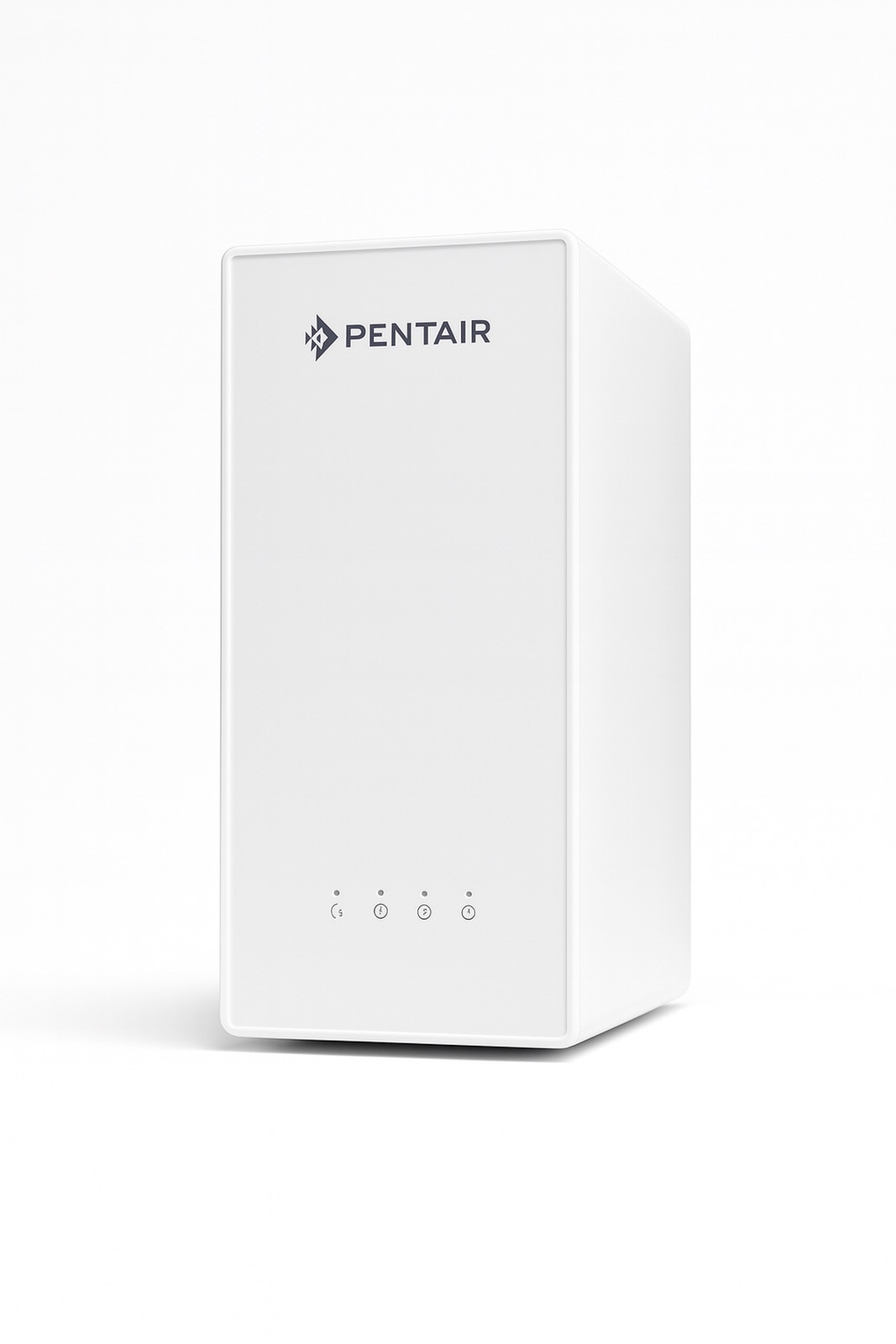
Under the sink · removes fluoride, THMs, PFAS and microplastics
Pentair ES60 under-bench RO
RRP $1,748 $1,595 Save $398
Independently lab-tested (report FW250926-28-C), including trichloromethane - the main THM. Reverse osmosis removes 99.9% of microplastics in published testing, 94%+ of PFAS, and around 90% of the fluoride where your supply adds it. No tank, and it tells you when filters are due. Ships with the first year's refill free.
ViewHASTINGS WATER QUESTIONS