HAURAKI · OFFICIAL COUNCIL DATA
What's actually in Paeroa, Waihi and Ngatea's tap water
Hauraki District Council answered the narrowed request free of charge with its own regulator compliance exports for calendar 2025, for all six zones it runs - Paeroa, Kaimanawa, Karangahake, Waihi, Waikino and the Hauraki Plains zone the regulator writes as Kerepehi/Waitakaruru: 1,861 field chlorine readings, quarterly trihalomethanes, monthly haloacetic acids and six-monthly metals. Three honest gaps first: the release holds no zone E. coli or coliform values, no pH and no turbidity - the council's letter says pH and turbidity are not required to be reported, and E. coli sits under a monthly rule outside the annual export - and it does not state fluoridation either way. What it does show: chlorine in every zone, lead never above 0.00155 mg/L, and chlorination by-products above the EWG guideline in all six. The free check reads your address.
THE HEADLINE NUMBERS
Six zones, by-products every month of the year.
Every zone reading in the release sits inside New Zealand's legal limits - each haloacetic acid inside its own limit, every trihalomethane inside its own. Hauraki District Council treats its water properly, and its own source tests show what the plants take out of the Waihou River and the streams. The same results show what stays in the water at the tap: trihalomethanes up to 0.0587 mg/L in Waikino, 391 times the EWG health guideline, and dichloroacetic plus trichloroacetic acid in all thirteen monthly rounds of every zone, up to 0.0778 mg/L combined on the Hauraki Plains. Lead was quantified in five zones, never above a sixth of the limit. The numbers are below; what you do about them is up to you.
ZONE BY ZONE
What was found in your zone
Field chlorine several times a week in every zone; trihalomethanes each quarter, two haloacetic acids monthly and metals twice a year. Zone E. coli, pH and turbidity values were not part of the release. These are the council's own results. Typical figures are medians; peaks are the highest single sample.
| Zone | Chlorine, typical | THMs, highest sample | Haloacetic acids, highest month | Worth knowing |
|---|---|---|---|---|
| Paeroa | 1.24 mg/L | 0.0195 mg/L | 0.048 mg/L | lead 0.00155 mg/L in January 2025, the district's highest, inside the 0.01 limit; the regulator logged a Paeroa lead event in January 2026, after this release's window |
| Kaimanawa | 1.19 mg/L | 0.0357 mg/L | 0.053 mg/L | lead below detection; the regulator logged an E. coli event here on 19 May 2025 - the release carries the notification reference, not the value |
| Karangahake | 0.84 mg/L | 0.0295 mg/L | 0.0478 mg/L | with Mackaytown; two chlorine entries keyed as 7.13 and 7.2 excluded as pH values in the wrong column; lead 0.00032 mg/L |
| Waihi | 1.18 mg/L | 0.0392 mg/L | 0.04 mg/L | membrane plant on the Walmsley Stream and Ohinemuri River; lead 0.00081 mg/L; Waihi Beach is another council's supply and is not here |
| Waikino | 1.16 mg/L | 0.0587 mg/L | 0.065 mg/L | the district's THM peak, 391 times the EWG guideline and 42% of the way to the limits; lead 0.00016 mg/L |
| Kerepehi/Waitakaruru | 1.29 mg/L | 0.0565 mg/L | 0.0778 mg/L | one zone for Ngatea, Kerepehi, Turua, Pipiroa, Kaihere and Waitakaruru; the regulator logged five manganese events here in 2025 that this export cannot check, because manganese is not a zone metal in it |
Source: Hauraki District Council LGOIMA release 618925, answered 14 September 2026 with the council's Hinekorako annual compliance exports for calendar 2025. Chlorine typicals are medians of the council's field readings at its named zone sites, 2 December 2024 to 31 December 2025 - 1,861 readings; three entries keyed as 7.13, 7.2 and 7.4 mg/L at Karangahake and Waikino are excluded as pH values in the chlorine column. THM figures are per-date sums of the four quantified species from four quarterly rounds; the ratio against New Zealand's per-substance limits peaked at 0.42 in Waikino. Haloacetic acids are the sum of dichloroacetic and trichloroacetic acid, the only two acids in the council's export, from thirteen monthly rounds; the report holds each acid against its own limit rather than the sum against the tighter one, and neither acid exceeded its limit in any round - dichloroacetic peaked at 0.027 mg/L in Waikino against 0.05, trichloroacetic at 0.054 on the Hauraki Plains against 0.2. Metals: two six-monthly rounds per zone (January and July 2025; two samples a round on the Hauraki Plains, which has two plants); lead quantified at least once in every zone except Kaimanawa, never above 0.00155 mg/L. The release carries no zone pH or turbidity values - the council's letter says they are not required to be reported - and no zone E. coli or coliform values, which sit under a monthly rule outside the annual export; the Kaimanawa workbook's rule commentary carries the reference of the regulator's May 2025 E. coli notification and nothing else. No fluoride result and no fluoridation statement for any zone. Raw-source and plant results are carried as notes only. No PFAS or microplastics tests anywhere in the release.
WHAT THIS MEANS FOR YOUR HOUSE
Three things to know.
By-products, monthly, in every zone
Chlorine meeting natural organic matter forms trihalomethanes and haloacetic acids, and every one of these six zones is river or stream fed. Waikino's THM peak of 0.0587 mg/L is 391 times the EWG health guideline and about 42% of the way to New Zealand's limits; the Hauraki Plains reached 0.0565 and Waihi 0.0392. The council reports two haloacetic acids monthly, and they were there in all thirteen rounds of every zone - up to 0.0778 mg/L combined on the Hauraki Plains in November 2025, 778 times the EWG guideline for the group. New Zealand sets a limit per acid, not for the sum, and each acid sat inside its own: dichloroacetic no higher than 0.027 against 0.05, trichloroacetic no higher than 0.054 against 0.2.
Why treatment matters: the Waihou River
The council also tests its raw sources, and the Waihou River feeding the Kerepehi plant returned E. coli in every one of 24 fortnightly samples, 63 to 23,100 per 100 mL, with iron up to 11.7 mg/L and manganese to 0.91. The Waitawheta Stream at Paeroa ran 24 of 25, the Ohinemuri River 24 of 24, the Walmsley Stream 21 of 24 and the Mangatarata Stream 22 of 26. That is untreated river water going into membranes, UV and chlorine, and it is not your tap water. What this release does not hold is the zone E. coli record that would show the tap side of that gap; the regulator's register shows one notified E. coli event, at Kaimanawa in May 2025, and five manganese events on the Hauraki Plains that the zone export cannot check.
What the release does not hold
No zone E. coli or coliform values, no pH, no turbidity, no fluoride result and no fluoridation statement - the council's own annual exports simply do not carry them, and the letter says so for pH and turbidity. This page and every Hauraki report state each absence on the row rather than filling it. What was measured came back inside the limits: lead no higher than 0.00155 mg/L at Paeroa in January 2025, mercury, cadmium, chromium and antimony never detected. The regulator's register adds a Paeroa lead event in January 2026, after this release's window. Not one PFAS or microplastics test was run.
YOUR ADDRESS
This is the district picture. Get the report for your home.
The free water check takes about two minutes, and it includes the PDF water report for your address - written from the same release, read for your house.
THE SYSTEM THAT FITS
What we'd fit in Hauraki.
THMs, haloacetic acids and the PFAS and microplastics nobody tests for only come out at the kitchen tap with reverse osmosis, and that's the ES60's job. If it's the chlorine in your showers that bothers you, that's a whole-house filter - we supply those by arrangement, so call us on 021 709 370.
Under the sink · removes fluoride, THMs, PFAS and microplastics
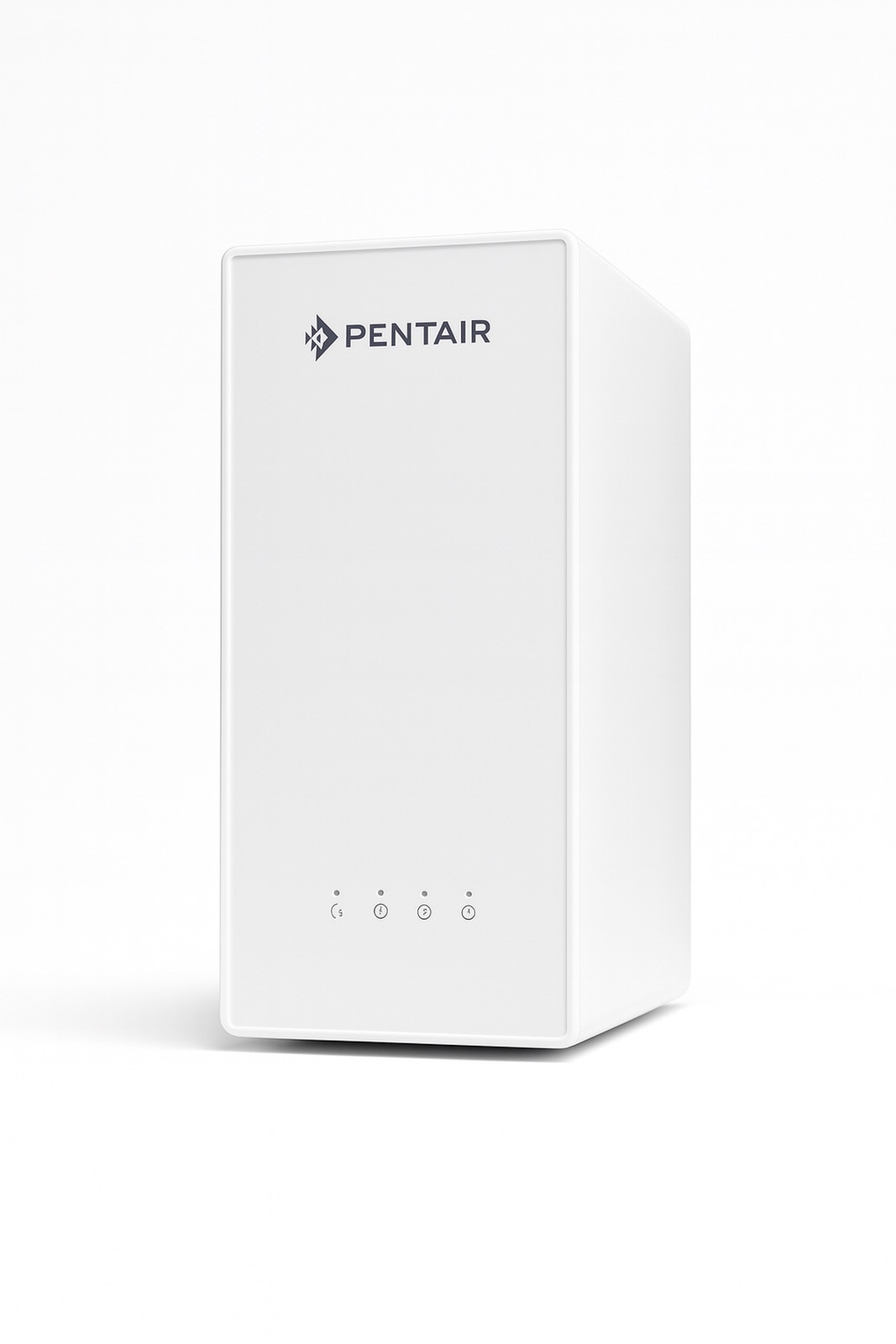
Pentair ES60 under-bench RO
RRP $1,748 $1,595 Save $398
Independently lab-tested (report FW250926-28-C), including trichloromethane - the main THM. Reverse osmosis removes 99.9% of microplastics in published testing, 94%+ of PFAS, and around 90% of the fluoride where your zone adds it. No tank, and it tells you when filters are due. Ships with the first year's refill free.
ViewHAURAKI WATER QUESTIONS