KAWERAU · OFFICIAL COUNCIL DATA
What's actually in Kawerau's tap water
Kawerau District Council answered all three parts of the request on 28 August 2026, free of charge, with a full year for the one supply it runs, in its two zones - Kawerau and Upper Valley Road: 1,095 daily chlorine readings, 1,013 daily fluoride results, twice-daily pH, 144 network E. coli samples, and one by-product sample and one metals round per zone. What it shows: no E. coli in any network sample and fluoride at 0.79 mg/L in both zones. On arsenic the release shows this: arsenic read 0.0118 mg/L in the Kawerau zone and 0.0122 mg/L in the Upper Valley Road zone on 15 June 2026, the single arsenic sample in the council's release for each zone, above New Zealand's 0.01 mg/L limit; the council's export marks both rows as complying with its monitoring rule, and the regulator's earlier results for the same zones, from February 2025, were 0.0047 to 0.0056 mg/L. The free check reads your address.

THE HEADLINE NUMBERS
Two zones, one supply, a year of daily readings.
Chlorine, fluoride, lead, the one trihalomethane sample per zone and every E. coli sample in the release sit inside New Zealand's legal limits. One result per zone did not: arsenic read 0.0118 mg/L in the Kawerau zone and 0.0122 mg/L in the Upper Valley Road zone on 15 June 2026, the single arsenic sample in the council's release for each zone, above New Zealand's 0.01 mg/L limit; the council's export marks both rows as complying with its monitoring rule, and the regulator's earlier results for the same zones, from February 2025, were 0.0047 to 0.0056 mg/L. The same release shows what else is in the water at the tap: fluoride in both zones, and trihalomethanes at 64 and 133 times the EWG health guideline. The numbers are below; what you do about them is up to you.
ZONE BY ZONE
What was found in your zone
Chlorine and fluoride daily at the zone's reticulation points and pH twice a day; 72 E. coli and coliform samples per zone through the year; one by-product sample, one metals round and one arsenic sample per zone. These are the council's own results. Typical figures are medians; peaks are the highest single reading.
| Zone | Chlorine, typical | THMs, one sample | Haloacetic acids | Worth knowing |
|---|---|---|---|---|
| Kawerau | 0.74 mg/L | 0.0096 mg/L | Not detected | fluoridated, 0.79 mg/L typical; 72 E. coli samples, none detected; lead and nickel below detection in the one metals round; arsenic read 0.0118 mg/L on 15 June 2026, the single arsenic sample in the council's release for this zone, above New Zealand's 0.01 mg/L limit; the council's export marks that row as complying with its monitoring rule, and the regulator's earlier results for the same zone, from February 2025, were 0.0053 and 0.0055 mg/L |
| Upper Valley Road | 0.61 mg/L | 0.02 mg/L | Not detected | fluoridated, 0.79 mg/L typical; 72 E. coli samples, none detected; total coliforms found three times, 144 MPN per 100 mL each; lead 0.00036 mg/L, inside the 0.01 limit; arsenic read 0.0122 mg/L on 15 June 2026, the single arsenic sample in the council's release for this zone, above New Zealand's 0.01 mg/L limit; the council's export marks that row as complying with its monitoring rule, and the regulator's earlier results for the same zone, from February 2025, were 0.0047 and 0.0056 mg/L |
Source: Kawerau District Council LGOIMA release, email of 28 August 2026: the council's monitoring report for 1 July 2025 to 30 June 2026, its daily pH workbook and twelve monthly UV plant reports. Chlorine typicals are medians of the daily free-chlorine readings at each zone's reticulation points - 730 in the Kawerau zone, two a day, and 365 in Upper Valley Road, one a day. Fluoride is the daily reticulation series, 678 and 335 results, with no fluoride row for 1 to 22 November 2025 in the Kawerau zone or for any day of that month in Upper Valley Road. E. coli and total coliforms: 72 samples per zone, counting once the 52 rows dated April 2026 that repeat February lab samples; the three Upper Valley Road total-coliform results are 1 December 2025 and 11 and 22 January 2026. THM figures are the one sample per zone of 11 May 2026, the sum of the quantified species; the two haloacetic acids in the release, dichloroacetic and trichloroacetic, were below detection in both. Metals: one round on 15 June 2026 - lead and nickel in the Kawerau zone, copper and lead in Upper Valley Road, copper 0.00066 mg/L; the other six plumbosolvency metals have no result in the release and are not reported as below detection. Arsenic is from the same round, one result per zone, held against New Zealand's 0.01 mg/L maximum acceptable value; the 'Complies With Rule' column of the council's export reads True on both rows and is carried as printed, and the regulator's national extract holds the February 2025 results quoted, which pre-date the release. The regulator's extract also holds a 14 January 2026 metals round that is not in the release. No reticulation turbidity in the release. Plant bacteriology, the bore and spring results and the UV plant reports are carried as notes only. No PFAS or microplastics tests anywhere in the release.
WHAT THIS MEANS FOR YOUR HOUSE
Three things to know.
The arsenic result, in full
Arsenic read 0.0118 mg/L in the Kawerau zone and 0.0122 mg/L in the Upper Valley Road zone on 15 June 2026, the single arsenic sample in the council's release for each zone, above New Zealand's 0.01 mg/L limit; the council's export marks both rows as complying with its monitoring rule, and the regulator's earlier results for the same zones, from February 2025, were 0.0047 to 0.0056 mg/L. Those are the facts in the release and in the regulator's extract, and this page adds nothing to them. The release holds no second arsenic sample for either zone and no arsenic result for the bores, the spring or the plant.
Why treatment matters: bores, a spring and a UV plant
Both zones draw on the Tarawera bores and the Pumphouse Spring, and the council's answer lists coarse screening, continuous turbidity monitoring, UV disinfection, pH correction, chlorination and fluoridation. The raw bore water returned total coliforms in 9 of 47 samples and the spring in 8 of 18, at most 19 MPN per 100 mL, with no E. coli in either. The UV plant's twelve monthly reports kept turbidity at or under 1 NTU for at least 99.9% of readings every month, and two of them, January and February 2026, print FAIL on the 2 NTU rule with four instances each. That is source and plant water, not your tap: 144 network samples, none with E. coli.
Fluoride in both zones, by-products in both, and a thin metals round
The council fluoridates both zones, and its daily network results read 0.79 mg/L typical, 0.66 to 0.99, against a 1.5 legal limit. The one trihalomethane sample per zone, on 11 May 2026, read 0.0096 mg/L in the Kawerau zone and 0.02 in Upper Valley Road - 64 and 133 times the EWG health guideline, and 9% and 19% of the way to New Zealand's combined limit - and both haloacetic acids tested were below detection. The one metals round tested lead and nickel in the Kawerau zone and copper and lead in Upper Valley Road: lead below detection in the first and 0.00036 mg/L in the second, against a 0.01 limit. The other six metals were not tested, and zone turbidity is not in the release. Not one PFAS or microplastics test was run.
YOUR ADDRESS
This is the district picture. Get the report for your home.
The free water check takes about two minutes, and it includes the PDF water report for your address - written from the same release, read for your house.
THE SYSTEM THAT FITS
What we'd fit in Kawerau.
Fluoride, THMs and the PFAS and microplastics nobody tests for only come out at the kitchen tap with reverse osmosis, and that's the ES60's job. If it's the chlorine in your showers that bothers you, that's a whole-house filter - we supply those by arrangement, so call us on 021 709 370.
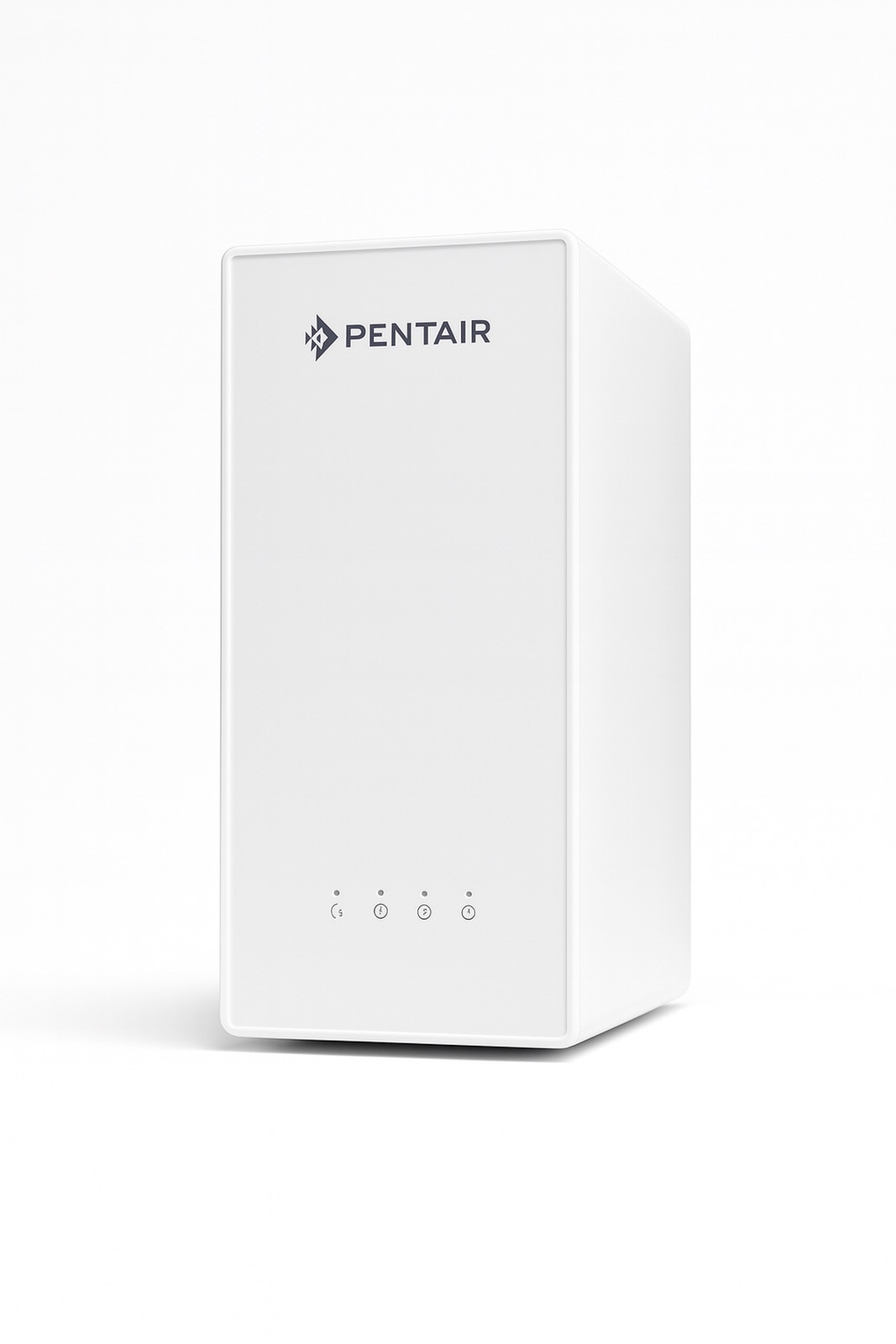
Under the sink · removes fluoride, THMs, PFAS and microplastics
Pentair ES60 under-bench RO
RRP $1,748 $1,595 Save $398
Independently lab-tested (report FW250926-28-C), including trichloromethane - the main THM. Reverse osmosis removes 99.9% of microplastics in published testing, 94%+ of PFAS, and around 90% of the fluoride where your supply adds it. No tank, and it tells you when filters are due. Ships with the first year's refill free.
ViewKAWERAU WATER QUESTIONS