
MASTERTON · OFFICIAL COUNCIL DATA
What's actually in Masterton's tap water
Masterton District Council answered inside its 20 working days with a 15-month lab export for both supplies it runs - 140 network E. coli samples, five quarterly by-product rounds, three metals rounds and 92 fluoride results. Two honest gaps first: the release holds network chlorine only as the operator's onsite reading at those quarterly and six-monthly samples, seven readings in Masterton, and it never describes either treatment train. What it does show: no E. coli in any network sample, fluoride on the urban supply at 0.87 mg/L, no lead anywhere in the network, and chlorination by-products in every quarterly round. The free check reads your address.

THE HEADLINE NUMBERS
Two supplies, by-products in every round.
Every network reading in the release sits inside New Zealand's legal limits. Masterton District Council treats its water properly, and its own results show it - the raw source tests show what the Kaituna plant takes out. The same results show what stays in the water at the tap: trihalomethanes in all five quarterly rounds, 81 times the EWG health guideline at their peak, and fluoride on the urban supply. Lead was never found in the network. The numbers are below; what you do about them is up to you.
SUPPLY BY SUPPLY
What was found in your supply
E. coli and coliforms every few days in Masterton and monthly at Tinui; by-products each quarter and metals twice a year in Masterton; chlorine, pH and turbidity as the operator's onsite readings at those samples. These are the council's own results. Typical figures are medians; peaks are the highest single sample.
| Supply | Chlorine, typical | THMs, highest sample | Haloacetic acids | Worth knowing |
|---|---|---|---|---|
| Masterton | 0.59 mg/L | 0.0122 mg/L | Not detected | fluoridated, 0.87 mg/L typical; 125 E. coli samples, none detected; lead below detection in all three metals rounds; chlorine rests on seven onsite readings |
| Tinui | 0.61 mg/L | Not tested | Not tested | fluoride not stated; 15 E. coli samples at the school tap, none detected; one annual metals screen, copper 0.019 mg/L inside the 1.3 health goal, zinc not tested |
Source: Masterton District Council LGOIMA release, answered 7 September 2026. E. coli and coliform figures are the council's Eurofins network samples, 4 June 2025 to 19 August 2026 at 25 Masterton street sites and 9 June 2025 to 13 August 2026 at the Tinui school tap. Chlorine typicals are medians of the operator's onsite readings at the network sampling points - seven in Masterton (1 July 2025 to 6 July 2026, at the quarterly by-product and six-monthly metals samples; the fortnightly E. coli samples carry no field readings) and 14 at the Tinui school tap - with pH and turbidity from the same readings. The Masterton THM figure is the highest per-sample total from five quarterly rounds, 1 July 2025 to 6 July 2026, summing the quantified species; the lab's own printed THM ratio against New Zealand's limits peaked at 0.082. Haloacetic acids: all six species below detection in every round, five at 0.005 mg/L and trichloroacetic acid at a coarser 0.05, so the figure can only understate. Metals: three six-monthly rounds at Ngaumutawa Road in Masterton - lead, mercury, cadmium, chromium and antimony below detection every time; copper, zinc and one nickel result quantified - and one annual round at Tinui School with no zinc column and no by-products at all. Fluoride figures are Upper Plain Reservoir, a service reservoir on the urban supply, not a reticulation tap. Raw-source and plant results are carried as notes only: the Kaituna plant tap returned one lead result of 0.0039 mg/L on 16 June 2025 in 22 rounds, inside the 0.01 legal limit and about 19 times the EWG guideline, never repeated and never seen in the network. Three data-entry slips are excluded by name - a pH keyed as 741, a temperature as 138 and a turbidity as 15 - and a fluoride first entered as 0.30 then corrected by the council to 0.82 is taken at the corrected value. The release names the source and plant for each supply but describes neither treatment train, and carries no supply-zone codes. No PFAS or microplastics tests anywhere in the release.
WHAT THIS MEANS FOR YOUR HOUSE
Three things to know.
By-products above the guideline, every quarter
Chlorine meeting natural organic matter forms trihalomethanes, and Masterton's supply returned them in all five quarterly rounds: 0.0048 mg/L in July 2025, 0.0122 at the January 2026 peak, 0.0068 in July 2026. The peak is 81 times the EWG health guideline and, on the lab's own ratio, under a tenth of the way to New Zealand's limits. The six haloacetic acids never reached detection. Tinui was not tested for either, so this page cannot say.
Why treatment matters: the Masterton source
The council also tests its raw water, and the Masterton source returned E. coli in 24 of 31 fortnightly samples, 1 to 10 per 100 mL, with total coliforms past the lab's 80 counting ceiling most weeks. The Tinui source ran the same way, E. coli in 7 of 15 monthly samples and up to 9, and one visit found the water visibly discoloured at 53.2 NTU. That is untreated source water, exactly what raw water looks like before the plant, and it is not your tap water: 140 network samples, none with E. coli. Closing the gap is the plant's job; what it leaves behind is the point of this page.
Fluoride on the urban supply, and no lead in the network
Upper Plain Reservoir carried 0.87 mg/L fluoride typically across 92 results, peaking at 0.97 against a 1.5 legal limit - dosed water, and the council also samples a tap it labels the Manuka Street unfluoridated supply. Tinui's status is not in the release. Lead was below detection in all three Masterton rounds and Tinui's one; the only lead quantified anywhere was a single 0.0039 mg/L at the Kaituna plant tap in June 2025, never repeated. Not one PFAS or microplastics test was run.
YOUR ADDRESS
This is the district picture. Get the report for your home.
The free water check takes about two minutes, and it includes the PDF water report for your address - written from the same release, read for your house.
THE SYSTEM THAT FITS
What we'd fit in Masterton.
Fluoride, THMs and the PFAS and microplastics nobody tests for only come out at the kitchen tap with reverse osmosis, and that's the ES60's job. If it's the chlorine in your showers that bothers you, that's a whole-house filter - we supply those by arrangement, so call us on 021 709 370.
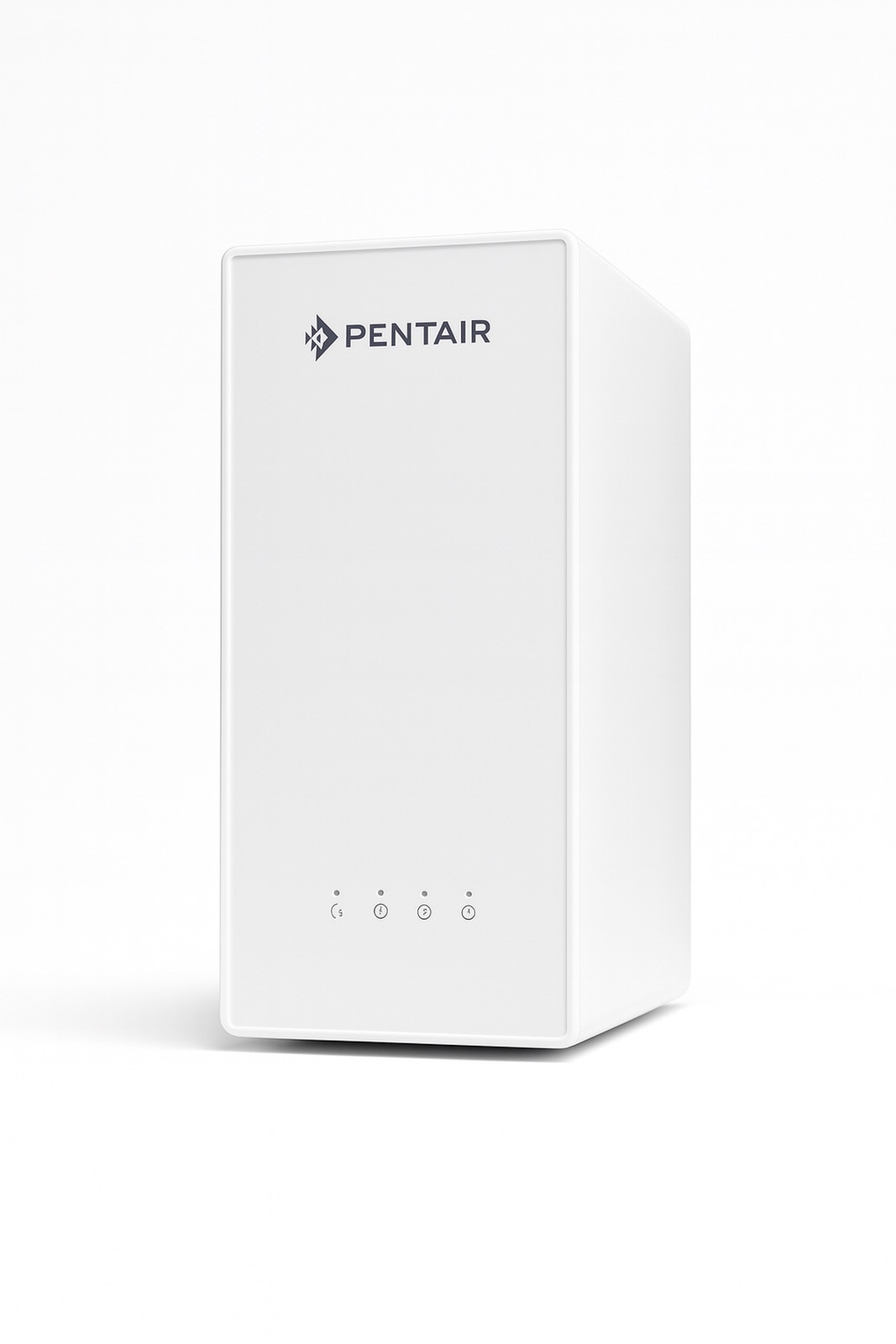
Under the sink · removes fluoride, THMs, PFAS and microplastics
Pentair ES60 under-bench RO
RRP $1,748 $1,595 Save $398
Independently lab-tested (report FW250926-28-C), including trichloromethane - the main THM. Reverse osmosis removes 99.9% of microplastics in published testing, 94%+ of PFAS, and around 90% of the fluoride where your supply adds it. No tank, and it tells you when filters are due. Ships with the first year's refill free.
ViewMASTERTON WATER QUESTIONS