
PALMERSTON NORTH · OFFICIAL COUNCIL DATA
What's actually in Palmerston North's tap water
Palmerston North City Council released its complete lab export. 14,660 results, four supply zones. Free chlorine: 0.66 mg/L typical. Fluoride: peaked at 1.41 mg/L, 94% of the legal limit. E. coli: not one detection in 429 samples. The water is safe. Ashhurst, Longburn and Bunnythorpe run their own zones - the free check reads yours.

THE HEADLINE NUMBERS
Two readings sit above health goals.
Your water passes New Zealand's rules. Palmerston North City Council treats its water properly. Their own results show it. The same results show what stays in the water: the chlorine that already did its job, the fluoride added on purpose, the traces the network picks up. All measured. All inside the limits. All listed below. What you do about it is up to you - this page gives you the numbers to decide with.
THE FULL RESULTS
What was actually found
Palmerston North City Council tests the city zone year-round - chlorine, pH, turbidity and E. coli - with metals and chlorination by-products through the year. These are the city's results, straight from the council's own lab export, ordered the way the council tests them.
| Substance | Reading | Legal limit / guideline | Share of limit |
|---|---|---|---|
| Chemical and Physical | |||
| Free available chlorine | 1.05 mg/Lpeak, 0.66 typical | 5 mg/L as Cl2 (legal limit) | 21% |
| Acidity (pH) | pH 7.6within the guideline range | 7-8.5 (guideline) | - |
| Turbidity (clarity) | 1.52 NTUpeak, 0.18 typical | 5 NTU (guideline) | 30% |
| Fluoride | 1.41 mg/Lpeak, 0.78 typical | 1.5 mg/L (legal limit) | 94% |
| Trace Elements | |||
| Zinc | 0.013 mg/Lhighest of 32 samples | 1.5 mg/L (guideline) | <1% |
| Copper | 0.011 mg/Lhighest of 32 samples | 2 mg/L (legal limit) | <1% |
| Cadmium, Chromium, Mercury, Nickel, Lead and Antimonytested for, never found | Not detected32 samples each, all below detection | individual legal limits apply | - |
| Chlorination by-products | |||
| Trihalomethanes (total)a by-product of disinfection, not a contaminant that got in | 0.0306 mg/Lhighest of 31 quarterly samples | 0.06 mg/L (tightest THM) | - |
| Haloacetic acids (total)checked against the tightest individual HAA limit | 0.01 mg/Lhighest of 32 quarterly samples | 0.05 mg/L (legal limit) | 20% |
| Bacteriological | |||
| E. colithe primary safety test - tested year-round, not just quarterly | All clear429 samples, none detected | less than 1 per 100 mL (legal limit) | - |
Source: Palmerston North City Council LGOIMA response SRC0464249, received 17 August 2026. Where no verified legal limit or guideline exists for a reading, no percentage is shown.
WHAT THIS MEANS FOR YOUR HOUSE
Three things to know.
The chlorine's work is already done
Chlorine keeps the water safe on the way to you. By your tap, that job is done. The city runs 0.66 mg/L typically. A whole-house carbon filter takes it out where the water enters your house.
Only reverse osmosis touches the fluoride
Palmerston North fluoridates. The council's own results peaked at 1.41 mg/L - 94% of the 1.5 legal limit. No whole-house filter removes fluoride. Reverse osmosis removes around 90% of it, at the kitchen tap.
Safe and pure are different questions
Not one E. coli detection in 429 samples. Every metal at trace or below detection. But chlorination by-products showed in every quarterly sample - inside the legal limits, above some international health goals. And nobody tests this water for PFAS or microplastics. Zero is a choice you make at your own tap.
YOUR ADDRESS
This is the citywide picture. Get the report for your address.
The free water check takes about two minutes, and it includes the PDF water report for your address - written from the same council data, read for your house.
THE SYSTEM THAT FITS
What we'd fit in Palmerston North.
Fluoride, PFAS and microplastics only come out at the kitchen tap with reverse osmosis, and that's the ES60's job. If it's the chlorine in your showers that bothers you, that's a whole-house filter - we supply those by arrangement, so call us on 021 709 370.
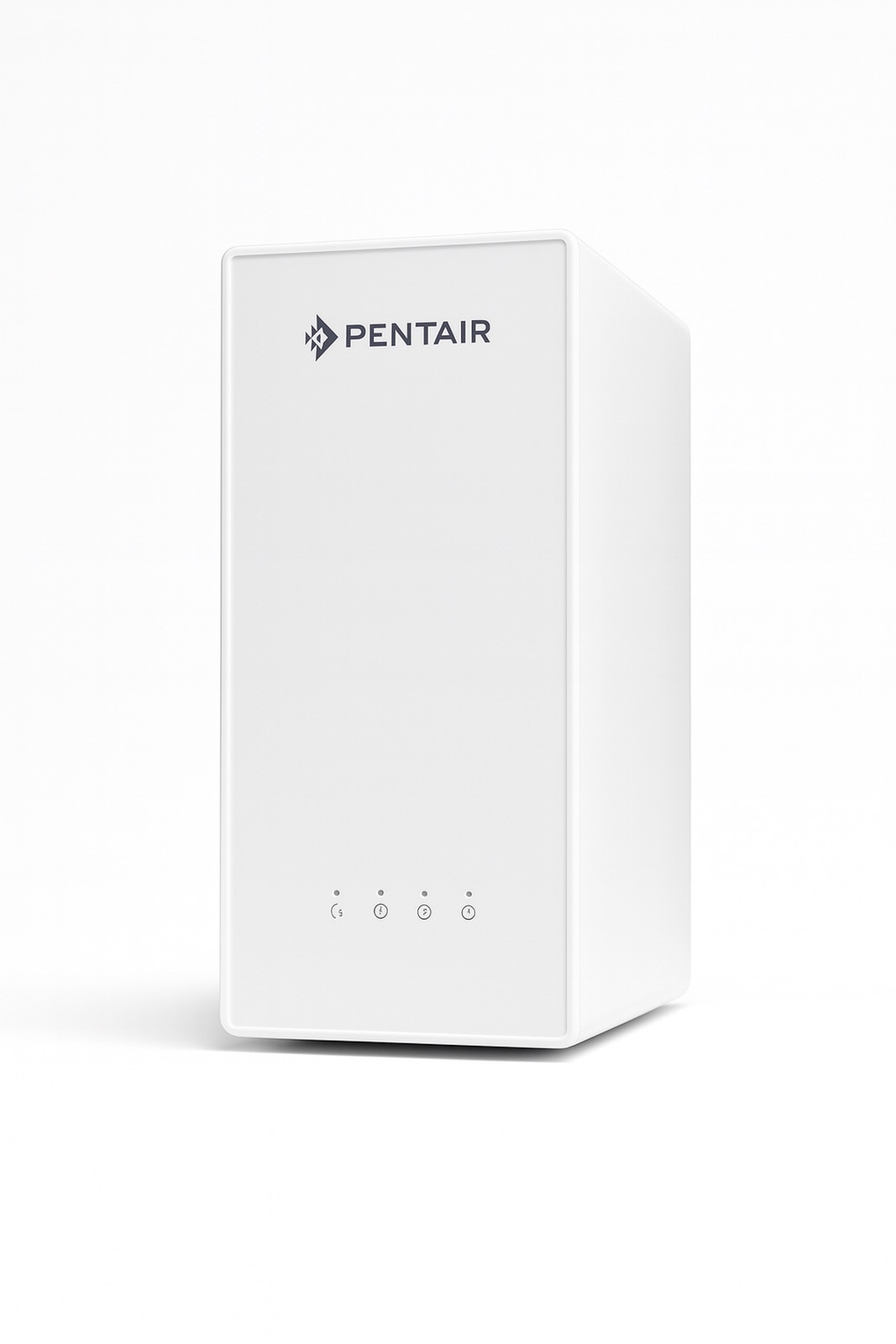
Under the sink · removes fluoride, PFAS and microplastics
Pentair ES60 under-bench RO
RRP $1,748 $1,595 Save $398
The one for fluoridated Palmerston North. Reverse osmosis removes around 90% of the fluoride at the kitchen tap, plus the PFAS and microplastics nobody tests for. No tank, and it tells you when filters are due. Ships with the first year's refill free.
ViewPALMERSTON NORTH WATER QUESTIONS