QUEENSTOWN LAKES · OFFICIAL COUNCIL DATA, PART ONE
Queenstown Lakes tap water: what the council has released so far
Queenstown Lakes District Council answered the request on 14 September 2026 for its four largest schemes - Queenstown (two zones), Wanaka, Arrowtown and Lake Hawea - with a year of field chlorine at named reticulation points, 991 readings, one trihalomethane round per zone, and six plant analyser exports. That is the whole zone record: no E. coli or coliforms, no pH, no turbidity, no metals, no haloacetic acids, no fluoride result and no treatment description. The remaining compliance results were requested on 15 September. Until they land there is no water report to offer for these zones, and this page does not pretend otherwise - it says what was released, zone by zone, and what was not. The free check still takes your address, and tells you honestly where it stands.

THE HEADLINE NUMBERS
Chlorine every week, and one March by-product round.
What the council released sits inside New Zealand's legal limits: every one of 991 chlorine readings between 0.37 and 1.43 mg/L against a 5 mg/L limit, and one trihalomethane sample per zone in March 2026, the highest 0.0117 mg/L at Arawata Terrace in Queenstown - inside the limits, 78 times the EWG health guideline. What it does not hold is the rest of the compliance record, the E. coli test above all, so this page makes no claim about it either way. The council's own monthly treatment-rule table is transcribed below, plant by plant.
ZONE BY ZONE
What the council released for your zone
Field free chlorine three to five times a week at named reticulation points, and one trihalomethane sample per zone. Nothing else reached the release for any zone. These are the council's own results. Typical figures are medians; peaks are the highest single reading.
| Zone | Chlorine, typical | Chlorine, peak | THM, March 2026 | What the council released |
|---|---|---|---|---|
| Queenstown | 0.70 mg/L | 0.92 mg/L | 0.0117 mg/L | 254 readings at seven sites - Arawata Terrace, Cemetery Road, Fernhill Road, Glenda Drive, Goldfields Reserve, Gorge Road, Manchester Place; fed by the Two Mile plant (lake) and the Shotover plant (bores) |
| Queenstown, Kelvin Heights | 0.79 mg/L | 1.02 mg/L | 0.0017 mg/L | 207 readings at Hanleys Farm, Kelvin Heights Golf Course, Lake Avenue and Quail Rise, 136 of them coded to the zone without a site name |
| Wanaka | 0.73 mg/L | 0.93 mg/L | 0.004 mg/L | 214 readings at twelve Wanaka and Albert Town sites; fed by the Beacon Point and Western plants, both from the lake |
| Arrowtown | 0.75 mg/L | 0.90 mg/L | 0.0007 mg/L | 156 readings at five sites including Millbrook; bore-fed from the Arrowtown plant |
| Lake Hawea | 0.89 mg/L | 1.43 mg/L | 0.0005 mg/L | 160 readings at seven sites; bore-fed from the Hawea plant; the district's chlorine peak |
Source: Queenstown Lakes District Council LGOIMA release LG26-0276, answered 14 September 2026 against the 9 August 2026 request as refined on 18 August to the Queenstown, Wanaka, Arrowtown and Lake Hawea schemes. Chlorine typicals are medians of the council's Eurofins-exported field free chlorine at named reticulation points, 1 July 2025 to 30 June 2026 - 991 readings, nothing excluded; two readings carrying the contractor's own limit set instead of the national standard are kept, same method, same zone. The one trihalomethane round is 16 and 17 March 2026, one sample per zone, the sum of the quantified species: chloroform 0.0103 and bromodichloromethane 0.0014 mg/L at Arawata Terrace, the other two species below detection; the lab's own ratio against New Zealand's limits was 0.049. The zone codes are the council's own supply-component codes from the export. The release holds no zone E. coli or coliform result, no pH, no turbidity, no metals, no haloacetic acids, no fluoride result and no treatment description, so this page does not report them; the follow-up request of 15 September 2026 asks for exactly those. The six plant analyser exports - a reading a minute at the Western, Arrowtown, Shotover, Beacon Point, Hawea and Two Mile plants - are plant water, not the reticulation, and are carried as notes with a stated sanity filter; the release never maps plants to zones beyond the letter's source table. The letter's monthly T3.17 and T3.86 treatment-rule table is transcribed in the plant notes below. No PFAS or microplastics tests anywhere in the release.
WHAT THIS MEANS FOR YOUR HOUSE
Three things to know.
What was released
Chlorine, measured properly and often: 991 field readings across the five zones, three to five a week at named points, every one between 0.37 and 1.43 mg/L against a 5 mg/L legal limit. Queenstown's own sites ran 0.70 mg/L typical, Kelvin Heights 0.79, Wanaka 0.73, Arrowtown 0.75 and Lake Hawea 0.89, with the district's peak of 1.43 at Hawea. One trihalomethane sample per zone in March 2026, the highest 0.0117 mg/L in Queenstown - inside the limits and 78 times the EWG health guideline - and near the detection floor in the bore-fed zones. Chlorine's job ends at your tap; a whole-house carbon filter takes it out where the water enters the house.
What was not, and what has been asked for
No E. coli or coliform results for any zone - the one test every other district page leads with. No pH, no turbidity, no metals, no haloacetic acids, no fluoride result, and no description of how any plant treats its water. The refined request named fluoride specifically, and the export came back with chlorine and trihalomethanes only. A second request for the remaining compliance results went to the council on 15 September 2026. Until it is answered this page makes no claim about Queenstown's bacteria, metals or fluoride either way, and no report is written for these zones.
The plants' own monthly rule table
The council's letter transcribes each plant's monthly treatment-rule compliance for the year. Every distribution zone was compliant in every month. At the plants: Western (Wanaka) was noncompliant in July 2025, January 2026 and May 2026 - UV failures of under 30 and under five minutes, a UVT sensor reading low from moisture, and a UVT fault under manual override, each under 30 minutes; Shotover (Queenstown) in August 2025, a UVT failure over two days during which the plant was run manually at full UV dose with manual UVT readings; Arrowtown in November 2025, 30 minutes of lost data; Beacon Point (Wanaka) in May and June 2026, data recorded every second minute instead of every minute, since resolved. The Hawea and Two Mile plants were compliant all year. The plant analysers themselves read chlorine at 0.79 to 0.88 mg/L typical leaving each plant.
YOUR ADDRESS
No report for these zones yet. Your address still goes on the list.
The free water check takes about two minutes. For Queenstown, Kelvin Heights, Wanaka, Arrowtown and Lake Hawea it will tell you plainly that the council's release does not yet hold enough to write a report, and your address goes on the list for the moment it does.
THE SYSTEM THAT FITS
What we'd fit in Queenstown.
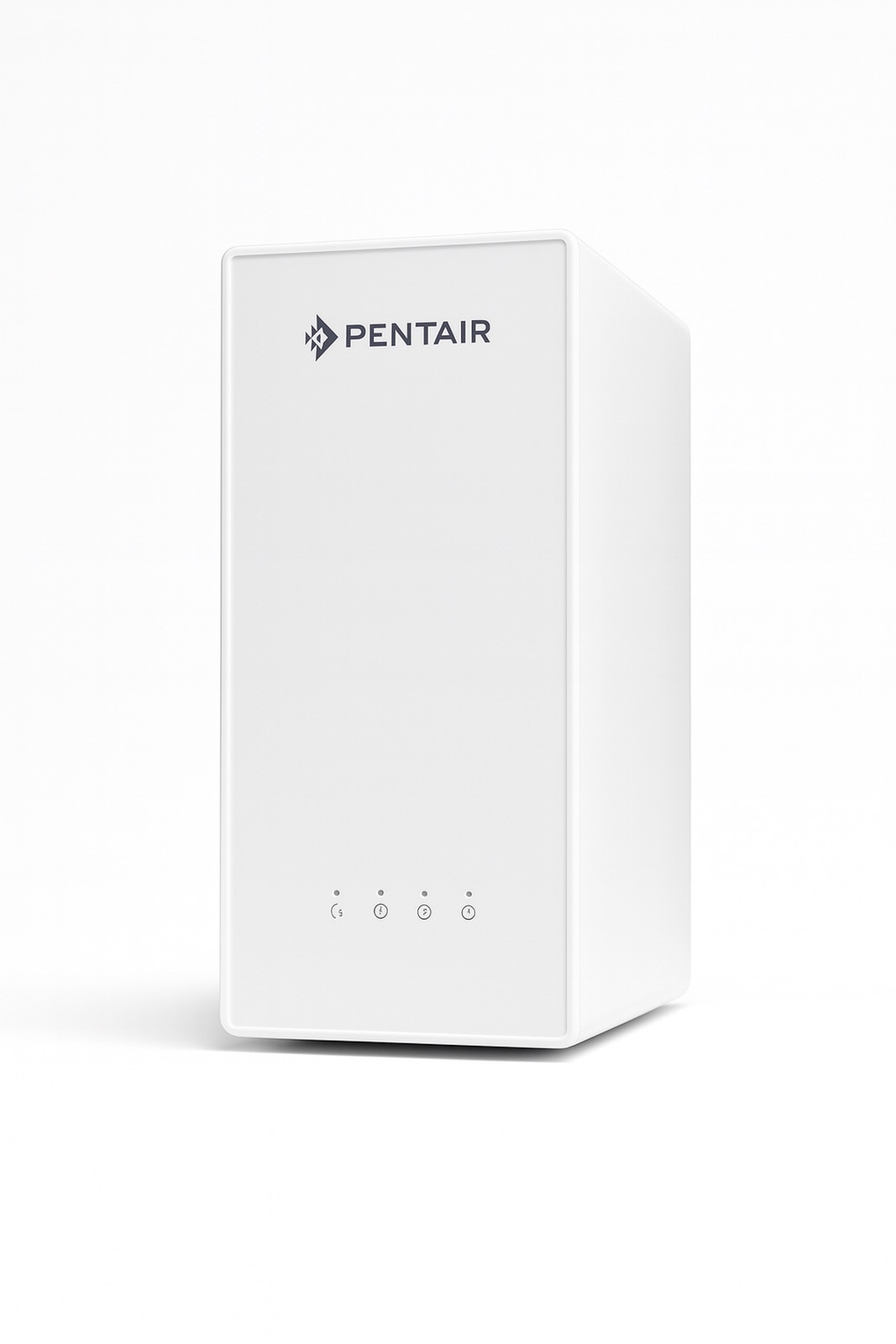
THMs, and the PFAS and microplastics nobody tests for, only come out at the kitchen tap with reverse osmosis, and that's the ES60's job. If it's the chlorine in your showers that bothers you, that's a whole-house filter - we supply those by arrangement, so call us on 021 709 370.
Under the sink · removes fluoride, THMs, PFAS and microplastics
Pentair ES60 under-bench RO
RRP $1,748 $1,595 Save $398
Independently lab-tested (report FW250926-28-C), including trichloromethane - the main THM. Reverse osmosis removes 99.9% of microplastics in published testing, 94%+ of PFAS, and around 90% of the fluoride where your zone adds it. No tank, and it tells you when filters are due. Ships with the first year's refill free.
ViewQUEENSTOWN LAKES WATER QUESTIONS