SOUTHLAND DISTRICT · OFFICIAL COUNCIL DATA
What's actually in Southland District's tap water
Southland District Council answered free of charge on 23 October 2026 with seven of its WaterOutlook reports and its source and treatment table: a year of field chlorine and pH, E. coli and coliforms, metals and quarterly chlorination by-products for the eleven schemes in its answer, Te Anau to Wyndham, and three and a half years of nitrate at the plants. What it shows: no E. coli in any of 618 network samples, no nitrate result at the legal limit, and on the Ohai/Nightcaps scheme the district's highest by-products, with dichloroacetic acid past New Zealand's limit at the Nightcaps and Wairio taps. The free check reads your address.
THE HEADLINE NUMBERS
Fourteen zones, no E. coli, and one scheme with a by-product past its limit.
Every E. coli sample in the release came back clear, and every reading in the fourteen reportable zones sits inside New Zealand's legal limits except one: dichloroacetic acid read 0.056 mg/L on 13 February 2025 and 0.055 mg/L on 11 March 2026 at the Nightcaps zone tap, above New Zealand's 0.05 mg/L limit; follow-up samples on 16, 17 and 18 March 2026 read 0.044, 0.037 and 0.035 mg/L, and the regulator's register lists dichloroacetic acid exceedances for this zone with event dates 21 February 2025 and 10 March 2026. Wairio, the same scheme's third zone, shows the same pattern: dichloroacetic acid read 0.054 mg/L on 24 February 2025 and 0.06 mg/L on 11 March 2026 at the Wairio zone tap, above New Zealand's 0.05 mg/L limit; follow-up samples on 16, 17 and 18 March 2026 read 0.041, 0.048 and 0.041 mg/L, and the regulator's register lists dichloroacetic acid exceedances for this zone with event dates 24 February 2025 and 10 March 2026; its bacteria report is not in the release, so it is not reportable. The Ohai/Nightcaps scheme also carries the district's highest trihalomethanes, 0.1815 mg/L at Nightcaps, 62% of the way to New Zealand's combined limit and 1,210 times the EWG health guideline. The numbers are below; what you do about them is up to you.
ZONE BY ZONE
What was found in your zone
Chlorine and pH in the field at one network site per zone - once or twice a week at most zones, monthly at Manapouri; E. coli and coliforms weekly in the ten larger zones and monthly in the four smaller; metals once or twice a year; trihalomethanes quarterly and two haloacetic acids quarterly or monthly in the ten larger zones. These are the council's own results. Typical figures are medians; peaks are the highest single reading.
| Zone | Chlorine, typical | THMs, highest sample | Haloacetic acids | Worth knowing |
|---|---|---|---|---|
| Te Anau | 0.89 mg/L | 0.0052 mg/L | Not detected | fluoride not stated; 57 E. coli samples, none detected; trihalomethanes 34 times the EWG health guideline; copper 0.019 mg/L; lead below detection |
| Manapouri | 0.88 mg/L | Not tested | Not tested | fluoride not stated; 13 E. coli samples, none; chlorine read monthly, 13 readings; lead below detection |
| Mossburn | 0.89 mg/L | Not tested | Not tested | fluoride not stated; 13 E. coli samples, none; lead below detection; nitrate-nitrogen at the plant no higher than 0.97 mg/L |
| Lumsden | 0.97 mg/L | 0.0031 mg/L | Not detected | fluoride not stated; 57 E. coli samples, none; nitrate-nitrogen at the plant up to 5.98 mg/L, at or above half the limit nine times; zinc 0.144 mg/L |
| Balfour | 0.97 mg/L | 0.0026 mg/L | Not detected | fluoride not stated; 56 E. coli samples, none; on the Lumsden/Balfour scheme; mercury not tested |
| Winton | 0.91 mg/L | 0.0229 mg/L | Not detected | fluoride not stated; 57 E. coli samples, none; lead 0.001 mg/L once, 19 February 2026, a tenth of the limit; trihalomethanes 152 times the EWG health guideline |
| Edendale | 1.12 mg/L | 0.0077 mg/L | Not detected | fluoride not stated; 57 E. coli samples, none; trihalomethanes 51 times the EWG health guideline; nitrate-nitrogen at the plant up to 4.26 mg/L |
| Otautau | 0.93 mg/L | 0.0126 mg/L | Not detected | fluoride not stated; 57 E. coli samples, none; trihalomethanes 84 times the EWG health guideline |
| Riverton | 1.04 mg/L | 0.0285 mg/L | 0.006 mg/L | fluoride not stated; 57 E. coli samples, none; trihalomethanes 190 times the EWG health guideline; antimony 0.002 mg/L, a tenth of its limit |
| Tuatapere | 0.84 mg/L | 0.0354 mg/L | Not detected | fluoride not stated; 56 E. coli samples, none; trihalomethanes 236 times the EWG health guideline, a third of the way to New Zealand's combined limit |
| Nightcaps | 1.04 mg/L | 0.1815 mg/L | 0.206 mg/L | fluoride not stated; 56 E. coli samples, none; dichloroacetic acid read 0.056 mg/L on 13 February 2025 and 0.055 mg/L on 11 March 2026 at the Nightcaps zone tap, above New Zealand's 0.05 mg/L limit; follow-up samples on 16, 17 and 18 March 2026 read 0.044, 0.037 and 0.035 mg/L, and the regulator's register lists dichloroacetic acid exceedances for this zone with event dates 21 February 2025 and 10 March 2026; trihalomethanes 62% of the way to New Zealand's combined limit |
| Ohai | 1.39 mg/L | 0.1731 mg/L | 0.099 mg/L | fluoride not stated; 56 E. coli samples, none; trihalomethanes 57% of the way to New Zealand's combined limit; dichloroacetic acid up to 0.032 mg/L, inside its 0.05 limit; chlorine peaked at 2.01 |
| Eastern Bush | 1.03 mg/L | Not tested | Not tested | fluoride not stated; 13 E. coli samples, none; river water treated with chlorine gas; lead below detection |
| Otahu Flat | 0.94 mg/L | Not tested | Not tested | fluoride not stated; 13 E. coli samples, none; on the Eastern Bush/Otahu Flat scheme; lead below detection |
Source: Southland District Council LGOIMA release, answered 23 October 2026: seven WaterOutlook reports and the source and treatment table in the council's letter. Chlorine typicals are medians of the field free chlorine at each zone's one network site, 2 September 2025 to 28 September 2026 (Manapouri monthly, 17 September 2025 to 17 September 2026), with pH from the same readings; four impossible field pH values are left out and exact duplicate rows counted once. E. coli and total coliforms are the council's lab results, weekly at the ten larger zones and monthly at Eastern Bush, Otahu Flat, Manapouri and Mossburn - 618 samples. THM figures are per-date sums of the quantified species; haloacetic acid figures are the sum of the two acids in the release, dichloroacetic and trichloroacetic, each also held against its own limit, quarterly from March 2025 and monthly at Nightcaps and Wairio. Metals are six-monthly at the larger zones and yearly at the four smaller; Balfour's report carries no mercury column. The release files both Edendale scheme field sites under Edendale; this page reads Seaward Rd as Edendale and Ferry St as Wyndham. Wyndham (chlorine 1.09 mg/L typical, trihalomethanes up to 0.0074) and Wairio (chlorine 0.98 typical, trihalomethanes up to 0.1991, dichloroacetic acid as set out above) are in the release without a bacteria report and are not reportable. Nitrate-nitrogen is raw water at each plant, 378 results from 18 January 2023 to 24 September 2026. No turbidity or fluoride result is in the release, and no PFAS or microplastics test.
WHAT THIS MEANS FOR YOUR HOUSE
Three things to know.
The Nightcaps and Wairio results, in full
Dichloroacetic acid read 0.056 mg/L on 13 February 2025 and 0.055 mg/L on 11 March 2026 at the Nightcaps zone tap, above New Zealand's 0.05 mg/L limit; follow-up samples on 16, 17 and 18 March 2026 read 0.044, 0.037 and 0.035 mg/L, and the regulator's register lists dichloroacetic acid exceedances for this zone with event dates 21 February 2025 and 10 March 2026. At Wairio: dichloroacetic acid read 0.054 mg/L on 24 February 2025 and 0.06 mg/L on 11 March 2026 at the Wairio zone tap, above New Zealand's 0.05 mg/L limit; follow-up samples on 16, 17 and 18 March 2026 read 0.041, 0.048 and 0.041 mg/L, and the regulator's register lists dichloroacetic acid exceedances for this zone with event dates 24 February 2025 and 10 March 2026. The Ohai/Nightcaps scheme draws a stream through membrane filtration and chlorine gas, per the council's table, and its three zones carry the district's highest trihalomethanes, 0.1731 to 0.1991 mg/L. Those are the facts in the release and the regulator's register, and this page adds nothing to them.
Nitrate at the plants
The release holds 378 nitrate-nitrogen results for the eleven schemes from January 2023 to September 2026, all raw water at the plant rather than a tap. None is at the 11.3 mg/L limit. Lumsden's are highest, 5.98 on 2 January 2026 and at or above half the limit nine times; Winton reached half the limit once, 5.71 in June 2024; Edendale peaked at 4.26, Otautau 3.95, Tuatapere 3.5, Riverton 1.75, Te Anau 1.2, Mossburn 0.97, Ohai 0.81, Eastern Bush 0.44 and Manapouri 0.04. New Zealand's limit is 11.3 mg/L measured as nitrate-nitrogen, which is the same limit as 50 mg/L measured as nitrate. Boiling does not remove nitrate: ESR's guide for households that run their own supply rates boiling as giving no removal, and rates reverse osmosis, and ion exchange with a resin chosen for the job, as good at removing it.
By-products in the larger zones, no fluoride result, no PFAS test
Trihalomethanes were found at all ten larger reportable zones, from 0.0026 mg/L at Balfour to 0.1815 at Nightcaps - 17 to 1,210 times the EWG health guideline. The four smaller zones carry no by-product result. The release holds no fluoride result anywhere and the council's table lists no fluoridation step, so every report says not stated rather than guessing. Zone turbidity is not in the release. Not one PFAS or microplastics test was run.
YOUR ADDRESS
This is the district picture. Get the report for your home.
The free water check takes about two minutes, and it includes the PDF water report for your address - written from the same release, read for your house.
THE SYSTEM THAT FITS
What we'd fit in Southland.
Fluoride, THMs and the PFAS and microplastics nobody tests for only come out at the kitchen tap with reverse osmosis, and that's the ES60's job. If it's the chlorine in your showers that bothers you, that's a whole-house filter - we supply those by arrangement, so call us on 021 709 370.
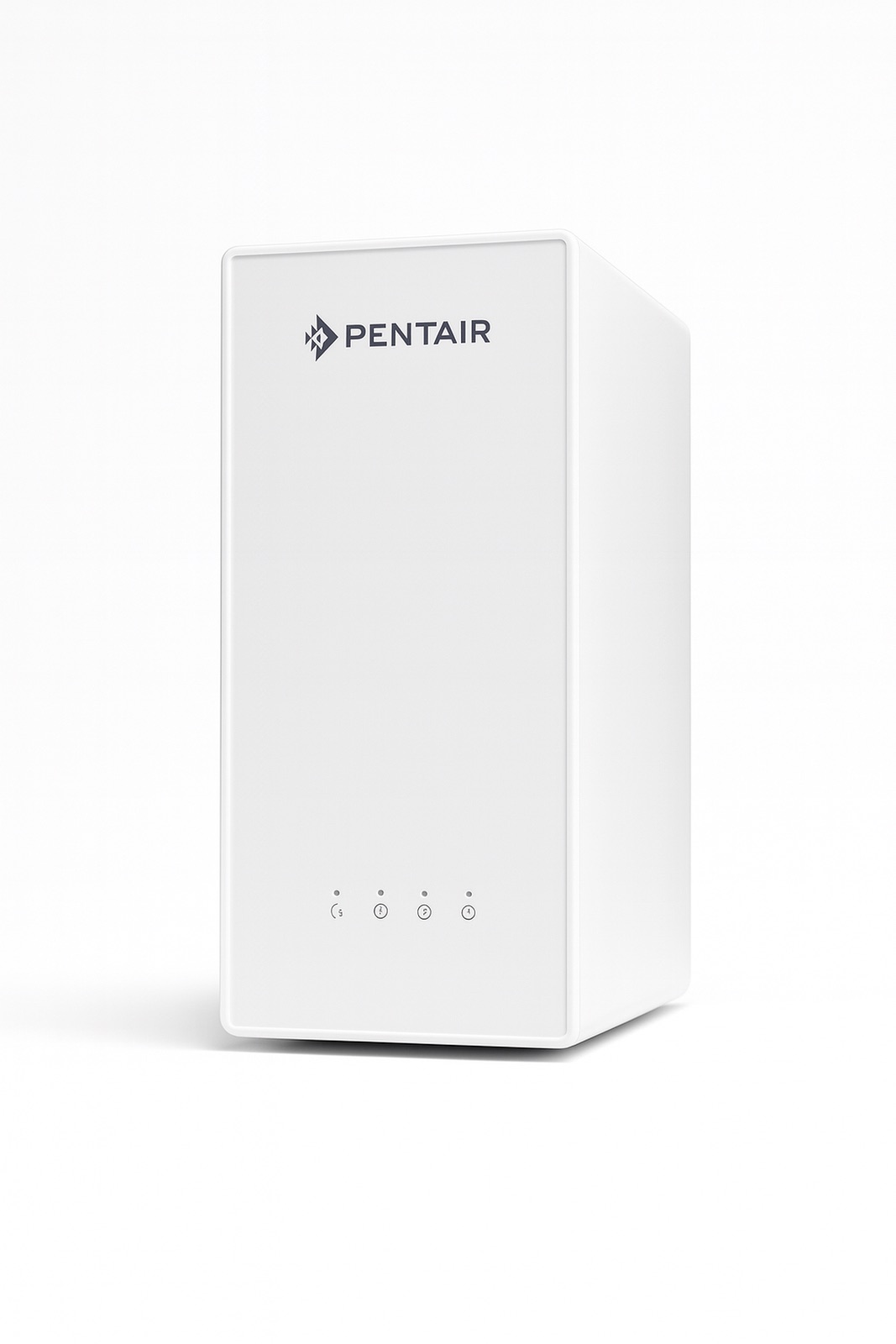
Under the sink · removes fluoride, THMs, PFAS and microplastics
Pentair ES60 under-bench RO
RRP $1,748 $1,595 Save $398
Independently lab-tested (report FW250926-28-C), including trichloromethane - the main THM. Reverse osmosis removes 99.9% of microplastics in published testing, 94%+ of PFAS, and around 90% of the fluoride where your supply adds it. No tank, and it tells you when filters are due. Ships with the first year's refill free. Pentair's brochure also lists nitrate nitrogen among the substances the unit reduces (report FW250926-28-C); it gives no percentage for nitrate, so we do not quote one.
ViewSOUTHLAND DISTRICT WATER QUESTIONS