THAMES-COROMANDEL · OFFICIAL COUNCIL DATA
What's actually in Thames and the Coromandel's tap water
Thames-Coromandel District Council answered all three parts of the request with fourteen months of lab exports for every zone it runs, Thames to Whangamata, plus its own source and treatment document - 259 zone chlorine readings, 388 zone E. coli samples, metals in every zone and by-products where its lab ran them. Three zones came without enough data to report, and this page still says what they show. What the rest shows: no E. coli at any treated zone tap, lead below a quarter of the limit everywhere treated, chlorination by-products above the EWG guideline in the five zones tested, a Thames supply the council lists as fluoridated whose measured fluoride sits at 0.03 mg/L, far under the dosing target - and one untreated rural supply, Puriri, with E. coli in every sample and one lead result over the New Zealand limit. The free check reads your address.
THE HEADLINE NUMBERS
Nine zones, one of them untreated.
Every reading at the eight treated zones sits inside New Zealand's legal limits, and the council's own results show it: 374 E. coli samples at treated zone taps, none with E. coli. Puriri is the exception, on the council's own description - no treatment, chlorine 0.00 in every reading, E. coli in all 14 samples up to 2000 per 100 mL, and lead 0.011 mg/L on 8 August 2025 against a 0.01 limit. Everywhere else the same results show what stays in the water at the tap: trihalomethanes up to 0.0412 mg/L in Thames, 274 times the EWG health guideline, and bromate at Onemana up to 0.0083 mg/L against a 0.01 limit. The numbers are below; what you do about them is up to you.
ZONE BY ZONE
What was found in your zone
Chlorine, E. coli and coliforms at zone taps through the year; metals in one to three rounds per zone; by-products where the lab ran them, and pH and turbidity only where the sites carried them. These are the council's own results. Typical figures are medians; peaks are the highest single sample.
| Zone | Chlorine, typical | THMs, highest sample | Haloacetic acids | Worth knowing |
|---|---|---|---|---|
| Thames | 0.93 mg/L | 0.0412 mg/L | 0.0176 mg/L | fluoride 0.03 mg/L typical, far under the dosing target; 61 E. coli samples, none detected; lead 0.00013 mg/L; no zone pH or turbidity in the release |
| Coromandel | 0.81 mg/L | 0.019 mg/L | 0.005 mg/L | not fluoridated; 62 E. coli samples, none detected; lead 0.00037 mg/L; no zone pH or turbidity in the release |
| Tairua | 0.91 mg/L | 0.0226 mg/L | 0.0054 mg/L | not fluoridated; 61 E. coli samples, none detected; lead 0.0021 mg/L, the highest treated-zone result, inside the 0.01 limit |
| Pauanui | 0.97 mg/L | 0.017 mg/L | 0.0046 mg/L | not fluoridated; 64 E. coli samples, none detected; chromium 0.049 and 0.033 mg/L in two single-metal results against a 0.05 limit, every full round 0.0012 or below detection |
| Whangamata | 1.04 mg/L | Not tested | Not tested | not fluoridated; zone data April to August 2026 only; 22 E. coli samples, none detected; lead 0.00019 mg/L |
| Matarangi | 0.87 mg/L | 0.0396 mg/L | 0.0156 mg/L | not fluoridated; five by-product rounds, the most in the district, 264 times the EWG guideline at the peak; 61 E. coli samples, none detected |
| Hahei | 1.12 mg/L | Not tested | Not tested | not fluoridated; 23 E. coli samples, none detected; one metals round with no nickel column; zinc 0.095 mg/L |
| Onemana | 1.01 mg/L | Not tested | Not tested | not fluoridated; 20 E. coli samples, none detected; bromate 0.0047 to 0.0083 mg/L in 26 zone results against a 0.01 limit, from bromide-rich bore water; mercury 0.00011 once |
| Puriri | 0.00 mg/L | Not tested | Not tested | untreated, per the council: E. coli in 14 of 14 samples, up to 2000 per 100 mL; lead 0.011 mg/L on 8 August 2025, above the 0.01 limit; aluminium up to 15 mg/L |
Source: Thames-Coromandel District Council LGOIMA release, answered 10 September 2026 with 44 WaterOutlook exports and the council's source and treatment document. Two lab eras: Veolia's old lab to 26 March 2026, Watercare Laboratory Services from 1 April 2026, together 3 July 2025 to 28 August 2026. Chlorine typicals are medians of lab-reported free chlorine at the council's own zone-coded sampling points - street taps, reservoirs, pump stations and plant kitchen-sink taps, as the council codes them - 259 readings across the nine reportable zones; one Puriri plant reading of 3.14 mg/L, identical to the same row's turbidity, is excluded as a copied cell. E. coli and coliform figures are the lab samples at the same points, 388 in all. THM and HAA figures are the lab's totals from one January 2026 round at Thames, Coromandel, Tairua and Pauanui and five rounds at Matarangi; Whangamata, Hahei, Onemana and Puriri carry no zone by-product result, so those cells say not tested. Metals: one to three rounds per zone, with single-metal follow-up rounds counted where the lab ran them - Tairua's fifteen lead results, Pauanui's fifteen chromium results, Puriri's eighteen lead results. pH and turbidity reached the export only for the Watercare-era sites that carried them; Thames, Coromandel and Tairua have none at any zone site in either era, and their reports say so on the row. Thames is listed as fluoridated in the council's treatment document; its nine measured results, July 2025 to March 2026, are 0.52 once, then 0.03 to 0.07, with three below the 0.02 detection limit. Three zones are in the release without enough data to report: Whitianga (22 chlorine readings, 1.04 mg/L typical, 22 E. coli samples with none detected, no zone metals in either era), Matatoki (plant water only - chlorine 0.85 typical after the filter, no E. coli in 14 plant samples) and Omahu (plant water only - chlorine 0.00 and E. coli in all 14 plant samples, untreated per the council's document). Nineteen samples at a catch-all miscellaneous sample point - hot-water lead tests on Puriri Valley Road, tanker filling sites, public drinking fountains - are not zone data for any scheme and are excluded by name. The regulator's own register logged Puriri's 7 August 2025 lead event and seven Puriri aluminium events between March 2025 and May 2026. Raw-source and plant results are carried as notes only. No PFAS or microplastics tests anywhere in the release.
WHAT THIS MEANS FOR YOUR HOUSE
Three things to know.
Puriri: an untreated supply, stated plainly
The council's own treatment document lists no treatment for the Thames Valley streams, and its own results at the Puriri tap on Wainui Road show what that means: chlorine 0.00 in every reading, E. coli in every one of 14 samples between July 2025 and August 2026, from 9.8 to 2000 per 100 mL, aluminium up to 15 mg/L in a daily flushing series in April 2026, and one routine lead result of 0.011 mg/L on 8 August 2025 - above New Zealand's 0.01 limit, with four follow-up samples that week at 0.00012 to 0.00023. That is a genuine exceedance of the standard, and a Puriri report says so instead of saying the water passes New Zealand's rules. Omahu, the other untreated Thames Valley supply, has no zone tap in the release; its plant water read 0.00 chlorine and E. coli in all 14 samples too.
Why treatment matters: two Thames Valley streams
The clearest lesson in the release is the Thames Valley itself. Puriri and Omahu take stream water with no treatment, and every one of their 28 samples carried E. coli. Matatoki, the third Thames Valley scheme, has disc filtration and chlorine: 0.85 mg/L typical after the filter and no E. coli in any of its 14 plant samples. The eight treated town zones - membranes, UV and chlorine on the peninsula, sand filtration and UV at Thames - returned 374 zone E. coli samples with none. Closing that gap is the plant's job; what it leaves behind is the point of this page.
Fluoride in name only at Thames, bromate at Onemana, chromium at Pauanui
The council lists fluoridation as the last step of the Thames plant's treatment, and the measured fluoride at Thames taps was 0.52 mg/L once in July 2025, then 0.03 to 0.07 or below detection - far under the 0.7 to 1.0 mg/L dosing target, and nothing after March 2026. This page says exactly that rather than calling Thames fluoridated. Onemana's bore water is rich in bromide, and 26 zone bromate results ran 0.0047 to 0.0083 mg/L against a 0.01 limit, 0.012 at the plant. Pauanui returned chromium of 0.049 and 0.033 mg/L in two single-metal results against a 0.05 limit, while every full metals round was 0.0012 or below detection. Lead was inside the limit at every treated zone, highest 0.0021 at Tairua. Not one PFAS or microplastics test was run.
YOUR ADDRESS
This is the district picture. Get the report for your home.
The free water check takes about two minutes, and it includes the PDF water report for your address - written from the same release, read for your house.
THE SYSTEM THAT FITS
What we'd fit in Thames and the Coromandel.
Fluoride, THMs and the PFAS and microplastics nobody tests for only come out at the kitchen tap with reverse osmosis, and that's the ES60's job. If it's the chlorine in your showers that bothers you, that's a whole-house filter - we supply those by arrangement, so call us on 021 709 370.
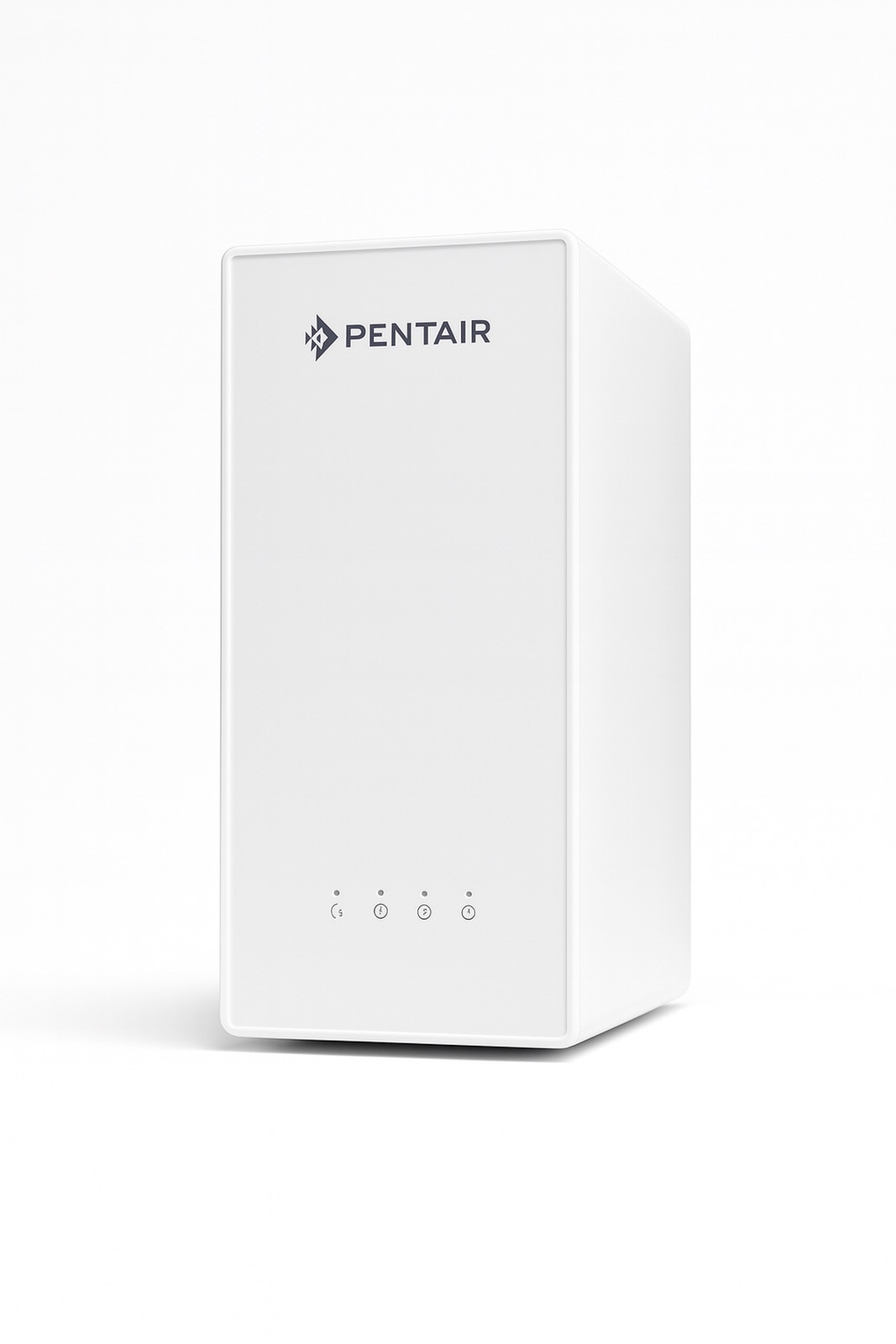
Under the sink · removes fluoride, THMs, PFAS and microplastics
Pentair ES60 under-bench RO
RRP $1,748 $1,595 Save $398
Independently lab-tested (report FW250926-28-C), including trichloromethane - the main THM. Reverse osmosis removes 99.9% of microplastics in published testing, 94%+ of PFAS, and around 90% of the fluoride where your zone adds it. No tank, and it tells you when filters are due. Ships with the first year's refill free.
ViewTHAMES AND COROMANDEL WATER QUESTIONS