WAIMATE · OFFICIAL COUNCIL DATA
What's actually in Waimate's tap water
Waimate District Council answered all four parts of request LGOIMA 1068 free of charge, with its two result spreadsheets following on 21 October 2026: a year of network chlorine, pH and E. coli for the seven supplies it runs, Waimate to Waihaorunga, and three years of chemistry - metals, chlorination by-products and nitrate - at its sources, plants and zone taps. What it shows: no E. coli in any of 224 network samples, no fluoridation step at any plant, and on the Lower Waihao rural supply two results past a New Zealand legal limit, nitrate at one tap in December 2024 and lead at another in March 2025. The free check reads your address.
THE HEADLINE NUMBERS
Seven supplies, and one rural scheme with a nitrate record.
Every E. coli sample in the year came back clear, and nearly every reading in the release sits inside New Zealand's legal limits. The exceptions are both on the Lower Waihao rural supply: lead read 0.03 mg/L at the Bignall tap on 13 March 2025, three times New Zealand's 0.01 mg/L limit, and the release holds no later metals result at that tap; and nitrate-nitrogen read 12 mg/L at the Stokes Road Corner tap on 2 December 2024 (53 mg/L as nitrate), above the 11.3 mg/L limit, with 11.3 at the same tap on 11 December 2024; the tap's other 49 nitrate results in the three years read 3.3 to 8.8 mg/L. The same release shows what else is in the water at the tap: trihalomethanes up to 204 times the EWG health guideline on Hook/Waituna, and chlorine from 0.31 mg/L typical in Waimate township to 2.34 at Waikakahi. The numbers are below; what you do about them is up to you.
ZONE BY ZONE
What was found in your zone
Chlorine, pH, E. coli and coliforms with every network sample - about weekly in the four larger zones, about monthly in Waikakahi and quarterly in Cannington-Motukaika and Waihaorunga; metals and by-products at the zone taps in dated rounds from January 2024 to September 2026. These are the council's own results. Typical figures are medians; peaks are the highest single reading.
| Zone | Chlorine, typical | THMs, highest sample | Haloacetic acids | Worth knowing |
|---|---|---|---|---|
| Waimate | 0.31 mg/L | 0.0257 mg/L | Not detected | not fluoridated; 52 E. coli samples, none detected; lead 0.0053 mg/L and zinc 4 mg/L at the Rugby Club tap on 17 January 2024, the zinc above its 1.5 mg/L taste guideline (zinc has no legal limit); nitrate-nitrogen at the bores no higher than 0.39 mg/L |
| Hook/Waituna | 1.35 mg/L | 0.0306 mg/L | 0.066 mg/L | not fluoridated; 51 E. coli samples, none; trihalomethanes 204 times the EWG health guideline at Maytown Rd on 1 April 2025, inside New Zealand's limits; chlorine peaked at 2.59; lead 0.00032 mg/L |
| Lower Waihao | 1.16 mg/L | 0.017 mg/L | 0.019 mg/L | not fluoridated; 50 E. coli samples, none; lead 0.03 mg/L at Bignall on 13 March 2025, three times the 0.01 limit, with no later metals result at that tap; nitrate-nitrogen 12 mg/L at Stokes Road Corner on 2 December 2024, above the 11.3 limit, and at or above half the limit in 34 of that tap's 51 results; pH 6.2 typical, under the 7.0 to 8.5 guideline |
| Otaio/Makikihi | 0.85 mg/L | 0.0008 mg/L | Not detected | not fluoridated; 52 E. coli samples, none; lead 0.00082 mg/L; nitrate-nitrogen no higher than 0.96 mg/L, at the Tavistock bore |
| Waikakahi | 2.34 mg/L | Not tested | Not tested | not fluoridated; 11 E. coli samples, none; chlorine peaked at 3.2 mg/L, inside the 5 mg/L limit; two metals rounds, lead 0.00092 mg/L; no by-product result at the zone taps |
| Cannington-Motukaika | 0.59 mg/L | Not tested | Not tested | not fluoridated; 4 E. coli samples, none; total coliforms once, 1 MPN per 100 mL; no metals result at any of the zone's taps in the release |
| Waihaorunga | 1.69 mg/L | Not tested | Not tested | not fluoridated; 4 E. coli samples, none; no metals result at any of the zone's taps in the release |
Source: Waimate District Council LGOIMA release 1068, answered 20 October 2026, with the council's two spreadsheets resent on 21 October 2026. Chlorine typicals are medians of the free chlorine measured with each distribution bacteriology sample, 17 October 2025 to 6 October 2026 (Waikakahi 12 November 2025 to 10 September 2026), with pH from the same samples - 224 in all. E. coli and coliform figures are the same samples. Metals, trihalomethanes and haloacetic acids are the zone-tap rows of the council's three-year chemistry export, in dated rounds from 17 January 2024 to 10 September 2026: THM figures are per-tap sums of the quantified species, which reproduce the lab's own printed totals and ratios, and haloacetic acid figures are the sum of the acids the lab quantified, each also held against its own limit. Two samples the lab itself flagged as a possible mix-up on 13 March 2025 are left out, and duplicated rows are counted once. Nitrate-nitrogen is from the same export at sources, plants and the one zone tap that carries it, Stokes Road Corner; 402 results from 17 October 2023 to 6 October 2026. Fluoridation is from the council's treatment table, which lists none at any of its nine plants. Cannington-Motukaika and Waihaorunga have no metals result at any tap in the release, and their reports say so. The regulator's register holds one Waimate notification in the period, an E. coli event at Otaio/Makikihi dated 12 February 2025, before the release's bacteriology year. No turbidity results: the council says they are not required for these samples. No PFAS or microplastics tests anywhere in the release.
WHAT THIS MEANS FOR YOUR HOUSE
Three things to know.
Lower Waihao's nitrate, in full
Stokes Road Corner is the only zone tap in the district with nitrate results: 51 between October 2023 and September 2026, 34 of them at or above half the 11.3 mg/L limit. On 2 December 2024 it read 12 mg/L as nitrate-nitrogen (53 as nitrate), the same day the Lower Waihao bore read 11.3 and the plant 11.1, and on 11 December 2024 it read 11.3. Its latest result in the release, 18 September 2026, is 6.2, the same as the plant that day. The council's table lists filtration, UV and chlorination for the Lower Waihao plant, with no nitrate step. Nowhere else in the district does nitrate-nitrogen reach 1 mg/L. New Zealand's limit is 11.3 mg/L measured as nitrate-nitrogen, which is the same limit as 50 mg/L measured as nitrate. Boiling does not remove nitrate: ESR's guide for households that run their own supply rates boiling as giving no removal, and rates reverse osmosis, and ion exchange with a resin chosen for the job, as good at removing it.
One lead result, read for what it is
The Bignall tap on the Lower Waihao supply read lead at 0.03 mg/L on 13 March 2025, three times New Zealand's 0.01 limit, with zinc 0.175 and copper 0.00192 the same day. Bignall's only other metals round, 17 January 2024, read 0.00125, and the release holds no later metals result at that tap. The zone's other metals tap, McNaughton's Rd, read 0.00028 to 0.00069 in five rounds to 10 September 2026. Every result stands as read, on this page and on every report for the zone. Elsewhere lead peaked at 0.0053 mg/L, at Waimate's Rugby Club tap in January 2024.
No fluoride, by-products in the larger zones, PFAS never tested
The council's treatment table lists chlorination at all nine of its plants, UV at four and filtration at two, and no fluoridation. Trihalomethanes peaked at 0.0306 mg/L on Hook/Waituna, 0.0257 in Waimate township and 0.017 on Lower Waihao - 204, 171 and 113 times the EWG health guideline, and at most 26% of the way to New Zealand's combined limit. Haloacetic acids reached 0.066 mg/L on Hook/Waituna, each acid inside its own limit. Waikakahi, Cannington-Motukaika and Waihaorunga have no by-product result at the tap. Not one PFAS or microplastics test was run.
YOUR ADDRESS
This is the district picture. Get the report for your home.
The free water check takes about two minutes, and it includes the PDF water report for your address - written from the same release, read for your house.
THE SYSTEM THAT FITS
What we'd fit in Waimate.
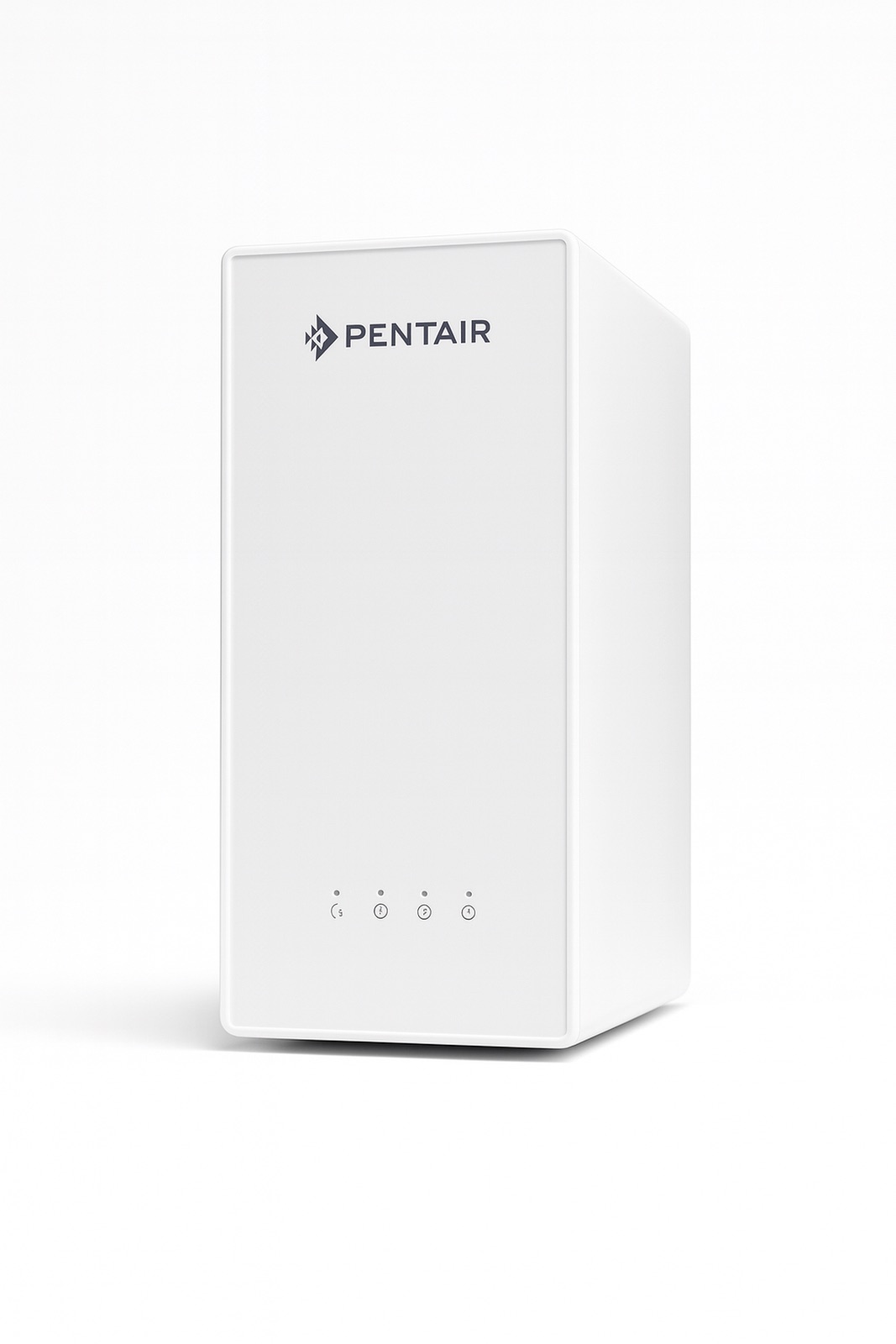
Fluoride, THMs and the PFAS and microplastics nobody tests for only come out at the kitchen tap with reverse osmosis, and that's the ES60's job. If it's the chlorine in your showers that bothers you, that's a whole-house filter - we supply those by arrangement, so call us on 021 709 370.
Under the sink · removes fluoride, THMs, PFAS and microplastics
Pentair ES60 under-bench RO
RRP $1,748 $1,595 Save $398
Independently lab-tested (report FW250926-28-C), including trichloromethane - the main THM. Reverse osmosis removes 99.9% of microplastics in published testing, 94%+ of PFAS, and around 90% of the fluoride where your supply adds it. No tank, and it tells you when filters are due. Ships with the first year's refill free. Pentair's brochure also lists nitrate nitrogen among the substances the unit reduces (report FW250926-28-C); it gives no percentage for nitrate, so we do not quote one.
ViewWAIMATE WATER QUESTIONS