OAMARU AND WAITAKI · OFFICIAL COUNCIL DATA
What's actually in Oamaru's tap water
Waitaki District Council answered all three parts of the request with a year of its Eurofins export and its operators' field grabs for the 25 zones it runs, Oamaru to Omarama - 3,309 chlorine readings, 1,041 E. coli samples, two metals rounds and one by-product round at the 17 larger-zone taps. Five small zones came without metals at the tap and are not reportable; this page still says what they show. What the rest shows: fluoride on the ten Oamaru zones, no E. coli at any Oamaru tap, chlorination by-products above the EWG guideline in every larger zone, and a 13 July 2026 metals round that read as a stagnant first-draw round across 16 taps at once - lead 0.234 mg/L at Palmerston, 23 times the New Zealand limit, with the council's resample two weeks later below detection. The free check reads your address.

THE HEADLINE NUMBERS
Twenty zones, and one July metals round that needs explaining.
Nearly every reading in the release sits inside New Zealand's legal limits, and Waitaki District Council's own results show a chlorinated, fluoridated Oamaru supply with no E. coli at any of its ten taps. The exception is the 13 July 2026 metals round: copper, zinc, lead and nickel were up at 16 of the 17 larger-zone taps at once, which reads as stagnant first-draw sampling, and lead went past the 0.01 mg/L limit at Palmerston (0.234), at Flag Swamp in the Goodwood zone (0.032, then 0.043 on a resample) and at Lower Waitaki (0.025). The council resampled all three taps within two weeks: below detection, below detection and 0.005. Both facts travel together on every report. The numbers are below; what you do about them is up to you.
ZONE BY ZONE
What was found in your zone
Chlorine, pH and turbidity two to three times a week and E. coli weekly at the 17 larger-zone taps, weekly to quarterly at the rest; metals twice a year at the larger taps and once at five smaller ones; one by-product round at the larger taps. These are the council's own results. Typical figures are medians; peaks are the highest single sample.
| Zone | Chlorine, typical | THMs, highest sample | Haloacetic acids | Worth knowing |
|---|---|---|---|---|
| Oamaru, Central | 0.78 mg/L | 0.0224 mg/L | 0.008 mg/L | fluoridated, 0.74 mg/L typical; 55 E. coli samples, none detected; lead 0.002 mg/L |
| Oamaru, North End | 0.93 mg/L | 0.0102 mg/L | 0.005 mg/L | fluoridated; 57 E. coli samples, none; lead 0.008 mg/L and zinc 0.495 in the July round, inside the limits |
| Oamaru, South Hill | 0.94 mg/L | 0.0115 mg/L | 0.005 mg/L | fluoridated, 0.72 mg/L typical at the tap; 56 E. coli samples, none; lead 0.001 mg/L |
| Oamaru, Old Mill Road | 0.92 mg/L | 0.0157 mg/L | 0.008 mg/L | fluoridated; the Reservoir Road and Stoke Street taps; 56 E. coli samples, none; lead 0.002 mg/L |
| Oamaru, Ardgowan | 0.91 mg/L | 0.015 mg/L | 0.007 mg/L | fluoridated; 56 E. coli samples, none; lead 0.004 mg/L |
| Oamaru, Weston-Enfield | 0.72 mg/L | 0.0276 mg/L | 0.011 mg/L | fluoridated; two taps, 108 E. coli samples, none; the Oamaru supply's THM peak, 184 times the EWG guideline; zinc 0.58 mg/L in the July round |
| Oamaru, Kakanui | 0.65 mg/L | 0.0238 mg/L | 0.012 mg/L | fluoridated; 56 E. coli samples, none; turbidity peaked at 14.2 NTU against a 5 NTU guideline, 0.73 typical; lead 0.006 mg/L |
| Oamaru, Herbert | 0.69 mg/L | 0.0181 mg/L | 0.009 mg/L | fluoridated; 56 E. coli samples, none; copper 0.281 mg/L in the July round, inside the 2 mg/L limit; lead 0.004 |
| Oamaru, Hampden | 0.73 mg/L | 0.0194 mg/L | 0.01 mg/L | fluoridated; 56 E. coli samples, none; lead 0.007 mg/L |
| Oamaru, Moeraki | 0.66 mg/L | 0.0206 mg/L | 0.011 mg/L | fluoridated; 56 E. coli samples, none; lead below detection, the only Oamaru zone where it was |
| Waihemo, Palmerston | 0.70 mg/L | 0.0138 mg/L | Not detected | fluoridation not stated; 56 E. coli samples, none; lead 0.234 mg/L on 13 July 2026, 23 times the limit, resampled below detection on 27 July - both on the report |
| Waihemo, Goodwood | 0.66 mg/L | 0.0124 mg/L | Not detected | fluoridation not stated; Flag Swamp and Shag Point taps, 104 E. coli samples, none; lead 0.032 then 0.043 mg/L at Flag Swamp in July, then below detection on 28 July; zinc 2.89 at Shag Point |
| Waihemo, Dunback | 0.55 mg/L | 0.0154 mg/L | Not detected | fluoridation not stated; 56 E. coli samples, none; lead 0.003 mg/L; turbidity peaked at 16 NTU, 0.49 typical |
| Lower Waitaki | 0.60 mg/L | 0.0121 mg/L | Not detected | fluoridation not stated; 68 E. coli samples, none; lead 0.025 mg/L on 13 July 2026, resampled 0.005 on 21 July; copper 0.926 and zinc 3.08 the same day |
| Tokarahi/Livingstone | 0.60 mg/L | 0.0217 mg/L | Not detected | fluoridation not stated; one E. coli detection in 57 samples, 1 cfu/100 mL; turbidity peaked at 299 NTU, 1.38 typical; chlorine peaked at 2.18 |
| Awamoko | 0.83 mg/L | Not tested | Not tested | fluoridation not stated; 13 E. coli samples, none; one metals round, six metals, nickel and zinc not tested |
| Kauru Hill | 0.59 mg/L | Not tested | Not tested | fluoridation not stated; 13 E. coli samples, none; turbidity peaked at 52 NTU, 1.24 typical; nickel and zinc not tested |
| Windsor | 1.23 mg/L | Not tested | Not tested | fluoridation not stated; 13 E. coli samples, none; chlorine peaked at 2.06 mg/L; nickel and zinc not tested |
| Omarama | 0.67 mg/L | Not tested | Not tested | fluoridation not stated; 23 E. coli samples, none; pH 6.7 typical, just under the 7.0 to 8.5 guideline; zinc not tested |
| Otematata | 0.82 mg/L | Not tested | Not tested | fluoridation not stated; 26 E. coli samples, none; pH 6.7 typical; zinc not tested |
Source: Waitaki District Council LGOIMA release, OIA 1756, answered 14 September 2026. Chlorine typicals are medians of the operators' field grabs at the council's own zone tap in each zone (two taps in Weston-Enfield, Goodwood and Old Mill Road), 1 August 2025 to 17 August 2026 - 3,309 readings across the 20 reportable zones - with pH and turbidity from the same grabs; five keyed values are excluded by name, among them a 94 mg/L chlorine at the Awamoko plant, a 1941 NTU turbidity at Oamaru Central and a Dunback turbidity the council itself marked as entered incorrectly. E. coli and coliform figures are the council's Eurofins lab samples at the same taps, 1,041 across the 20 zones; a private groundwater sample at 21 London Street, Hampden, run under the council's account, is not counted anywhere. THM figures are per-tap sums of the quantified species from the one by-product round, 22 July 2026, at the 17 larger-zone taps; the lab prints no total, only a ratio against New Zealand's limits, which the species reproduce - the highest ratio was 0.119 at Dunback. Haloacetic acids: dichloroacetic acid was the only acid ever quantified, at the ten Oamaru taps, so the figure is that value and the not-detected ceiling is the 0.005 mg/L limit shared by five of the six acids. Metals: two rounds at the 17 larger-zone taps (8 to 12 January and 13 July 2026) and one at Awamoko, Kauru Hill, Windsor, Omarama and Otematata (11 May 2026, six or seven metals, no zinc); the 13 July round read as a stagnant-draw round across 16 taps and its lead results at Palmerston, Flag Swamp and Lower Waitaki stand as read, with the council's resamples of 21, 27 and 28 July beside them. The regulator's own register logged those July lead events for Palmerston, Goodwood and Lower Waitaki, and one E. coli event at Tokarahi on 30 September 2025. Fluoride figures are the Oamaru plant's analyser tap and the South Hill reticulation check, plant water feeding all ten Oamaru zones; no other zone carries a fluoride result or a treatment description, so the page says not stated rather than guessing. Five zones are in the release without metals at the tap and are not reportable: Kurow (109 chlorine readings, 0.71 mg/L typical, no E. coli in 23 samples, plant-tap metals only), Duntroon (6 readings, 0.73 typical), Stoneburn (5 readings, 0.67), Lake Ohau village (4 readings, 0.88) and Bushy Creek Rural, where free chlorine read 0.00 at every one of the five grabs, E. coli was found in three of four lab samples (2, 6 and 8 cfu/100 mL) with coliforms past 80 each time, and no plant sampling point exists anywhere in the release - the regulator's register holds five E. coli notifications for Bushy Creek between February 2025 and February 2026. Raw source results, the campground taps and the private taps in the release are carried as notes only. No PFAS or microplastics tests anywhere in the release.
WHAT THIS MEANS FOR YOUR HOUSE
Three things to know.
One metals round, read for what it is
On 13 July 2026 the council's contractor sampled all 17 larger-zone taps for metals and the results moved together: copper, zinc, lead and nickel up at 16 taps at once, which is what a stagnant first-draw sample looks like - water that has sat in a fitting overnight. Lead went past the 0.01 mg/L limit at three of them: Palmerston 0.234, Flag Swamp 0.032 and Lower Waitaki 0.025. The council resampled within two weeks: Palmerston below detection on 27 July, Flag Swamp 0.043 on 21 July then below detection on 28 July, Lower Waitaki 0.005 on 21 July. Every result stands as read, the peak and the resample together, on this page and on every report for those zones. Lead comes from fittings, not the plant, and the fix is at the tap.
Why treatment matters: the Oamaru race
The council also tests its raw water, and the irrigation race at Redcastle Road that feeds the Oamaru plant returned E. coli in 24 of 25 samples, 2 to 390 per 100 mL. The Kauru River and the Windsor source ran past the lab's 800 counting ceiling, Tokarahi's to 730 and Awamoko's every sample of twelve. That is untreated source water, and it is not your tap water: 612 Oamaru samples with no E. coli, and one detection in 1,041 across all twenty zones. The two small campground taps at Falstone and Sailors Cutting are the other side of that line - E. coli in every sample - and they are not on any reportable zone. Closing the gap is the plant's job; what it leaves behind is the point of this page.
Fluoride on the Oamaru supply, by-products in every larger zone
The Oamaru plant fluoridates: ten analyser-tap results at 0.72 to 0.78 mg/L, 0.74 typically, matched monthly by South Hill reticulation results of 0.56 to 0.79, against a 1.5 legal limit. No other zone carries a fluoride result or a treatment description, so the page says not stated. The one by-product round put trihalomethanes above the EWG health guideline at every larger tap, peaking at 0.0276 mg/L in Weston-Enfield, 184 times the guideline and about a tenth of the way to New Zealand's limits; dichloroacetic acid quantified at all ten Oamaru taps, up to 0.012 at Kakanui against a 0.05 limit. The five smaller zones were never tested for by-products, and their one metals round carried no zinc. Not one PFAS or microplastics test was run.
YOUR ADDRESS
This is the district picture. Get the report for your home.
The free water check takes about two minutes, and it includes the PDF water report for your address - written from the same release, read for your house.
THE SYSTEM THAT FITS
What we'd fit in Oamaru.
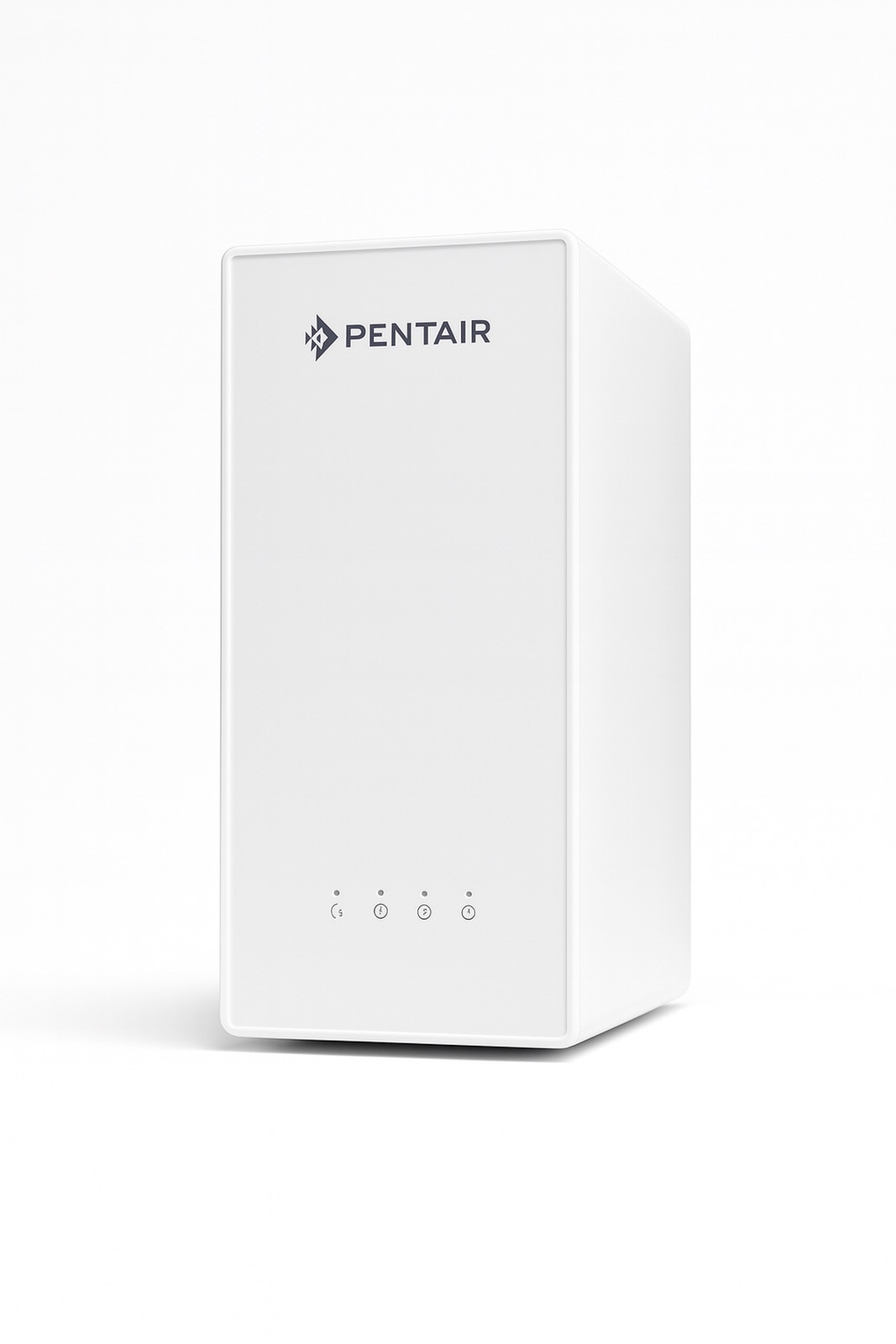
Fluoride, THMs and the PFAS and microplastics nobody tests for only come out at the kitchen tap with reverse osmosis, and that's the ES60's job. If it's the chlorine in your showers that bothers you, that's a whole-house filter - we supply those by arrangement, so call us on 021 709 370.
Under the sink · removes fluoride, THMs, PFAS and microplastics
Pentair ES60 under-bench RO
RRP $1,748 $1,595 Save $398
Independently lab-tested (report FW250926-28-C), including trichloromethane - the main THM. Reverse osmosis removes 99.9% of microplastics in published testing, 94%+ of PFAS, and around 90% of the fluoride where your zone adds it. No tank, and it tells you when filters are due. Ships with the first year's refill free.
ViewOAMARU AND WAITAKI WATER QUESTIONS